
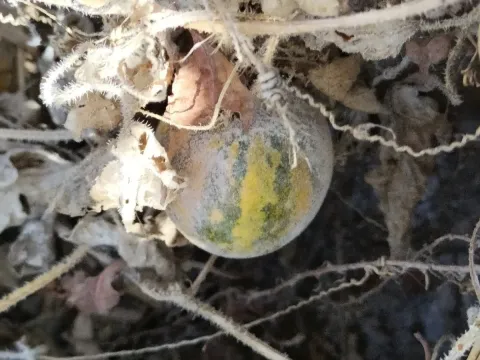
Buffalo gourd
Cucurbita foetidissima
Buffalo gourd (Cucurbita foetidissima) is a perennial vine belonging to the Cucurbitaceae family, native to the arid regions of North America. It is characterized by its extensive, fleshy taproot which allows it to thrive in desert environments.
What the section contains
Buffalo gourd
The seeds should be sown in late spring when the soil has thoroughly warmed up. They require a temperature of at least 20 degrees Celsius for optimal germination, as they are highly sensitive to cold, damp soil conditions.
Seeds should be planted at a depth of 3–5 cm. Given the plant's aggressive growth habit and long, trailing stems, wide spacing between rows is essential to prevent overcrowding and allow sufficient air circulation.
During the first season, growth is relatively slow because the plant directs most of its energy into developing its substantial root system. Weed control during this stage is vital to ensure the young plants are not outcompeted.
Propagation is typically done via seeds, which exhibit high viability. Careful selection of site and timing is the primary requirement for establishing a healthy and productive crop of this resilient species.
This crop is exceptionally drought-tolerant and thrives in semi-arid climates. It prefers well-drained, sandy or gravelly soils, as poor drainage is the most significant limiting factor for its successful cultivation.
Full sun is an absolute requirement for the buffalo gourd. Any degree of shading will significantly reduce the plant's photosynthetic capacity and stunt the development of its root and fruit systems.
The soil should have a neutral or slightly alkaline pH. While the plant is hardy, it benefits from moderate soil fertility in the early stages, although it excels at extracting minerals from deep within the soil profile.
Excessive irrigation is detrimental to the plant, often leading to crown rot and other root-borne diseases. The irrigation strategy should focus on minimal supplemental water to encourage deep root penetration.
In terms of climate, it is perfectly suited for regions with high temperature fluctuations, showing remarkable heat resistance compared to other members of the squash family.
The buffalo gourd is primarily studied for its potential as a source of starch and oil. The large, tuberous roots contain high levels of carbohydrates, which could be utilized for industrial applications such as ethanol production.
The seeds are rich in protein and fats, making them a potential secondary product for the oilseed industry. However, processing is required to handle the bitter compounds present in the plant tissues.
Yields vary significantly based on the age of the plants. The root system grows continuously over several years, meaning that harvest volume increases annually, making it a long-term agricultural proposition.
Green biomass production is abundant during the summer months, but it requires specialized handling due to its strong, unpleasant odor, which limits its immediate use as conventional green fodder for livestock.
Economical harvesting remains a challenge due to the deep nature of the roots. Future scaling of this crop will depend on the development of specialized digging equipment to harvest roots without damage.
Like many cucurbits, the buffalo gourd is susceptible to powdery mildew, especially during periods of high humidity. This fungus covers the leaves, significantly reducing the plant's vigor and yield potential.
Aphids and spider mites are the most common insect pests. These pests feed on the foliage and can transmit various viruses that weaken the plant's overall health and growth cycle.
Root rot, caused by soil-borne pathogens like Fusarium and Pythium, is the most lethal threat to buffalo gourd plantations. These issues arise almost exclusively in soils with poor aeration or excessive moisture.
Preventative management is key. Rotating crops and ensuring proper site selection are the most effective ways to manage potential threats without resorting to intensive chemical applications.
Monitoring the plant for signs of stress, such as yellowing leaves or stunted growth, is essential for early intervention. Proper hygiene and removing diseased plant debris after harvest are recommended practices.