
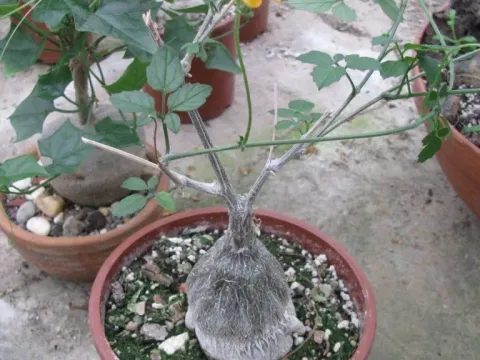
Cephalopentandra
Cephalopentandra
Cephalopentandra (Cephalopentandra ecirrhosa) is a perennial succulent from the Cucurbitaceae family, highly valued for its distinctive caudex. Sowing should be performed in a well-draining mineral-rich substrate, preferably with a high content of sand and perlite to ensure optimal drainage.
What the section contains

Cephalopentandra
The ideal temperature for germination ranges from 22 to 25 degrees Celsius. Providing a consistent temperature and avoiding sudden fluctuations are critical for successful seedling development during the first few weeks after sowing.
Seedlings are sensitive to moisture levels and require a delicate balance: the substrate should be kept damp but never waterlogged to prevent rot. As the plant develops its first true leaves, it should be carefully repotted to encourage healthy root growth.
Potting for young plants must involve small containers, as oversized pots retain too much moisture, which is the primary cause of seedling failure in this species. Slow growth during the early stages is normal and requires patience.
Bright, indirect light is essential for seedlings to prevent them from becoming leggy. Once established, the young plants can be moved to a brighter environment, gradually increasing their tolerance to natural sunlight.
Native to the arid regions of East Africa, Cephalopentandra thrives in conditions that mimic its natural habitat. It requires high light intensity, although it benefits from shading during the harshest peak hours to protect the delicate skin of the caudex.
The soil mixture must be extremely porous and airy, consisting of a mix of potting soil, coarse grit, and pumice. Such a structure allows for rapid drying and aeration of the root zone, which is crucial for the survival of this succulent.
During the active growth season, the plant needs warm temperatures, ideally between 20 and 30 degrees Celsius. Winter dormancy is mandatory; during this phase, the plant should be kept in a cool area with minimal light and near-zero watering.
Watering should be sporadic and strictly based on the dryness of the soil. When active, water should be applied at the base of the plant, ensuring that the caudex remains dry to prevent fungal infections and spotting.
Good ventilation is key to maintaining the plant's health, as stagnant air increases the risk of mold and pest infestations. Proper spacing between plants is highly recommended in professional collections.
The most significant threat to Cephalopentandra is fungal rot resulting from poor cultural practices, particularly overwatering. Once rot affects the woody or fleshy caudex, it is often difficult to reverse the damage.
Pests such as spider mites and mealybugs frequently target the young leaves and shoots. These pests feed on the plant's sap, weakening it and potentially causing systemic damage if left untreated for an extended period.
Management of diseases involves preventive measures, such as maintaining a strict dry-down cycle for the soil and ensuring excellent air circulation. If rot occurs, affected areas must be surgically removed and treated with fungicides.
For pest control, environmentally friendly insecticidal soaps or systemic treatments can be utilized during the growing season. It is vital to perform checks under the leaves where pests typically hide and colonize.
Monitoring the plant's overall turgor and color provides early warning signs of distress. Changes in the color of the caudex or sudden leaf drop are immediate indicators that the plant requires urgent attention or re-evaluation of its environment.