
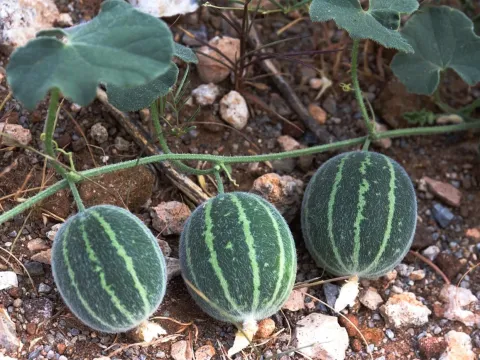
Arrow-leaved cucumber
Cucumis sagittatus
The arrow-leaved cucumber (Cucumis sagittatus) is a perennial herbaceous species belonging to the family Cucurbitaceae. It is native to the arid savanna regions of Africa, where it has evolved to thrive in harsh environments.
What the section contains
Arrow-leaved cucumber
The plant is botanically identified by its distinctive arrow-shaped leaves and a robust root system that often features tubers. These subterranean parts serve as water and nutrient reserves, allowing the plant to survive severe drought cycles.
In terms of climate, Cucumis sagittatus is strictly thermophilic and requires a high number of heat units to reach maturity. It flourishes under full sunlight and is highly intolerant of cold or freezing temperatures, which cause irreparable damage to its tissues.
The ideal soil for this crop must be extremely well-drained, such as sandy or loamy substrates. Heavy clay soils are unsuitable because they retain moisture for too long, which quickly triggers root rot in this desert-adapted species.
While not a primary commercial vegetable crop, it is of great scientific interest in genetic breeding programs. Its natural resilience provides a valuable genetic template for developing drought-tolerant varieties of other related cucurbits.
The species is susceptible to various powdery mildew strains, which are common in many members of the Cucurbitaceae family and can thrive in poor ventilation conditions.
Spider mites represent a major threat to the plant, particularly in hot and dry climates where their reproduction rate peaks, leading to significant defoliation if left unchecked.
Aphids are a frequent concern not only due to direct sap feeding but also because they frequently vector damaging mosaic viruses that lead to stunting and yield reduction.
Root pathogens are commonly associated with over-irrigation. Proper moisture management and ensuring a porous soil mix are essential for maintaining the biological health of the root zone.
Integrated pest management strategies are recommended, emphasizing the use of beneficial insects and regular scouting to identify early signs of pathogen or pest colonization.