
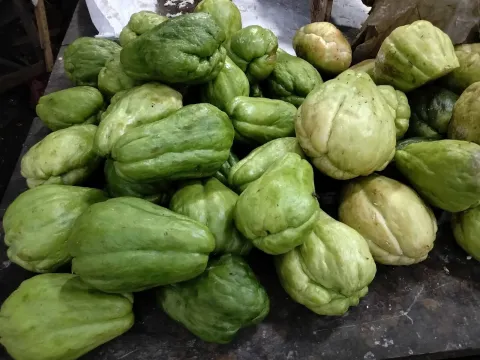
Chayote
Sicyos edulis
Chayote (Sechium edule) is a perennial climbing vine belonging to the Cucurbitaceae family. In tropical climates, the plant can grow for several years, producing extensive stems that can stretch up to 20 meters in length.
What the section contains
Chayote
The propagation of this crop is unique: the entire fruit serves as the seed. The embryo begins to germinate inside the mature fruit while it is still attached to the vine or shortly after harvesting.
To plant, a fully mature, healthy fruit without damage is selected. It should be buried in fertile soil at an angle, leaving the sprout end slightly exposed to allow the shoot to emerge naturally.
In temperate zones, chayote is grown as an annual or inside greenhouse facilities, as the plant is highly sensitive to frost and cold weather conditions during the early stages of growth.
Originally from Central America, particularly Mexico, the chayote has been cultivated for centuries and is now a staple vegetable in many tropical and subtropical regions around the globe.
Chayote requires a warm, frost-free climate to thrive. Even minor cold snaps can severely damage or kill the foliage, which is why planting should only occur after all risks of frost have passed.
The plant prefers deep, fertile, and well-drained loamy soils. It is highly responsive to organic matter, so incorporating compost or well-rotted manure into the planting site is essential for vigorous growth.
Adequate moisture is critical for this crop. While it needs consistent irrigation to maintain soil moisture, it is equally important to prevent waterlogging, as the roots are prone to rotting in saturated soil.
A sturdy trellis or net system is necessary for the vines to climb. Proper support not only optimizes space but also improves air circulation and protects the fruit from contact with damp soil.
Full sun exposure is preferred for maximum production. The vine produces numerous lateral branches, and sufficient sunlight is vital for the development of both the vegetative mass and the fruit yield.
A mature chayote vine is incredibly productive, often yielding between 50 to 100 fruits per season. The fruits are prized for their mild flavor, crisp texture, and versatility in culinary applications.
The culinary utility of chayote is extensive; the fruit can be consumed raw in salads, boiled, stir-fried, baked, or added to soups. The young leaves and shoots are also edible and often prepared like spinach.
In addition to the fruits, the plant develops starch-rich tubers on its roots. These tubers are edible and serve as an additional food source, often harvested at the end of the growing season.
The harvest period is quite long, lasting several weeks or even months under favorable conditions. This makes chayote a reliable and sustainable crop for small-scale farming and domestic gardens.
Nutritionally, chayote is a significant source of vitamins, minerals, and dietary fiber, making it a valuable addition to a healthy diet in regions where it is cultivated commercially.
Root rot is the most common threat to chayote, usually caused by improper soil drainage or excessive irrigation. Ensuring a well-drained planting environment is the best preventive measure.
Powdery mildew can affect the leaves, particularly during periods of high humidity or poor air movement. Regular monitoring and the application of appropriate fungicides are necessary to control the spread.
Common pests such as aphids and spider mites may attack the tender leaves. Using integrated pest management strategies, such as the use of biological controls or organic soaps, helps maintain plant health.
Whiteflies can also be a challenge in greenhouse environments. Strict greenhouse hygiene, such as removing old plant debris and maintaining good ventilation, is essential to keep pest populations low.
Regular inspections are recommended to identify early signs of nutrient deficiency or disease. Maintaining the plant's vigor is the most effective way to help it withstand environmental stresses.
Fruits should be harvested when they reach their optimal market size, usually before they become too large or tough. Harvesting at the right stage ensures the best flavor and texture.
Due to the delicate nature of the skin, fruits must be harvested with care. A sharp knife or pruner should be used to cut the stem, preventing any mechanical injury to the fruit.
After harvest, fruits should be stored in a cool, dry, and well-ventilated location. If handled properly, chayote fruits can have a long shelf life, staying fresh for several months.
In areas where frost is expected, all fruits must be harvested before the first cold night. Even if some fruits are not fully mature, they can still be used for various culinary purposes.
The harvesting of root tubers is performed after the vines have died back or have been removed. These tubers should be cleaned, dried, and stored similarly to potatoes until ready for consumption.