
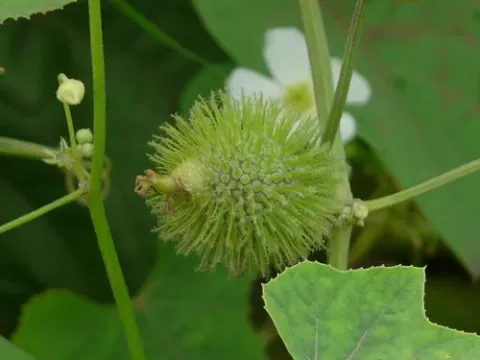
Bristly loofah
Luffa echinata
The bristly loofah is a heat-loving annual plant, typically grown as a transplant in temperate climates to ensure a long enough growing season. Seeds should be started indoors 30-40 days before the last frost date.
What the section contains
Bristly loofah
To enhance germination, it is recommended to soak the seeds in warm water or growth stimulants for 12-24 hours prior to planting. The ideal soil temperature for seedling emergence is between +25 °C and +28 °C.
Transplanting to a permanent outdoor location should only occur once all risks of frost have passed and the soil has sufficiently warmed up. Sudden cold snaps are detrimental to the plant's survival.
The planting pattern must accommodate the vigorous growth of the vines; spacing should be at least 60-80 cm apart. Trellises or supports are essential to maintain the plant vertically and improve airflow.
Direct seeding in the soil is only advisable in regions with long, hot summers. Seeds are planted 3-4 cm deep in well-warmed soil, ensuring appropriate distance between the hills to prevent overcrowding.
As a member of the Cucurbitaceae family, this plant requires high thermal energy for proper development. It thrives when the sum of active temperatures stays consistently above +20 °C throughout the season.
The soil should be fertile, light in texture, and possess excellent drainage characteristics. A pH level between 6.0 and 7.0 is optimal for maximizing the availability of essential nutrients.
Bristly loofah demands intense, direct sunlight. Any shading negatively impacts the production of fruit sets and slows down the overall vegetative growth, leading to thinner vines and reduced yield.
Watering must be regular and sufficient, especially during the flowering and fruit-setting stages. However, waterlogging should be avoided to prevent root rot and other moisture-related diseases.
Protection from high winds is an important agronomic consideration. Since the vines are fragile and have large leaves, planting them in a sheltered area or using windbreaks can significantly improve performance.
The yield of the bristly loofah is heavily dependent on effective pollination and a steady nutrient supply. The plant produces many small fruits covered in prickly bristles, which are highly valued.
Unlike common sponge gourds, this species is often grown for pharmaceutical or ornamental purposes. The harvest yield is typically measured by the total biomass of the fruits and the viability of the seeds.
With intensive care, including regular fertilization with potassium-rich fertilizers, one can expect around 10-15 fruits per plant. Pruning side shoots helps redirect energy towards developing existing fruit.
Pollination efficiency is a major factor in yield. In environments with low insect activity, manual pollination is recommended by transferring pollen from male to female flowers to ensure optimal development.
Yield tends to decrease significantly with extreme temperature fluctuations. The best results are observed during periods of stable, hot weather with relative humidity around 65-70%.
Aphids and spider mites are the primary pests affecting this crop. They proliferate rapidly in hot, dry conditions and can cause significant damage to the foliage and developing vines.
Powdery mildew represents a major threat, appearing as a white dusty coating on leaves. It spreads quickly in stagnant air and high-humidity environments where airflow is insufficient.
Root rot occurs if the soil is kept too wet or if cold water is used for irrigation. This disease can cause the entire plant to wilt suddenly as the root system fails to function properly.
Anthracnose can infect the fruit and stems, leaving brown spots that may lead to rot. Prevention involves strict crop rotation and avoiding planting in areas previously occupied by other cucurbits.
Managing pests and diseases involves using bio-control agents and targeted fungicides. Treatments should be applied preventatively before the fruit-set phase to ensure crop safety.
Harvesting bristly loofah fruits is done once the outer shell has completely dried. The fruit should turn a light brown color and feel lightweight, indicating it is ready for collection.
To ensure high seed quality, fruits should be left on the vine until the first signs of senescence or frost. After harvest, they require final drying in a well-ventilated indoor space.
Proper drying is crucial; it prevents mold from growing inside the fibrous interior of the fruit. This process typically takes two to four weeks depending on ambient humidity and temperature.
Cleaning the fruits requires protective gloves to avoid irritation from the prickly bristles on the surface. Once cleaned, the fruits can be processed for seeds or ornamental use.
Storing the harvested seeds is best done in paper bags kept in a cool, dark, and dry location. This method effectively maintains seed viability and protects them from moisture throughout the winter.