
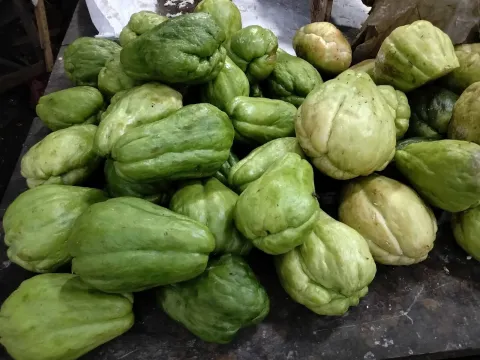
Chayote
Sechium
Chayote (Sechium edule) is a perennial climbing vine belonging to the Cucurbitaceae family. Unlike most vegetables, the entire fruit is planted instead of seeds, as the fruit contains a single large seed that starts to sprout while still inside the produce.
What the section contains

Chayote
Planting takes place in late spring once all danger of frost has passed, as the plant is extremely sensitive to cold temperatures. The fruit is buried at a 45-degree angle in rich, well-draining soil, leaving the sprouted end slightly exposed above the surface.
Given its vigorous growth, spacing should be at least two meters between plants. In regions with shorter growing seasons, starting the plant in a greenhouse or container is recommended to ensure a long enough period for vine maturation.
Robust trellising is an essential component of chayote cultivation. As the plant can reach lengths of 10 to 20 meters, the support system must be sturdy enough to bear the weight of both the heavy vines and the numerous fruits produced throughout the season.
Pruning is often necessary to manage the dense foliage. By removing excessive lateral stems, growers can focus the plant's energy on fruit production and ensure adequate airflow through the canopy, which reduces the risk of fungal infections.
Chayote thrives in warm, tropical, or subtropical climates, with optimal growth occurring between 20 and 28 degrees Celsius. Exposure to temperatures near freezing can result in immediate die-back of the aerial parts of the plant.
Moisture management is critical; the plant requires consistent watering but cannot tolerate waterlogged soil, which leads to root rot. A layer of organic mulch helps retain moisture while keeping the root zone at a stable temperature.
Soil should be rich in organic matter, such as compost or well-rotted manure, with a neutral or slightly acidic pH. Good drainage is non-negotiable to prevent root diseases that are common in overly saturated heavy clay soils.
Exposure to full sun is necessary for the plant to flower and fruit effectively. While the plant can tolerate partial shade in extremely hot regions, excessive shading usually results in reduced yields and weaker stem growth.
Regular fertilization with balanced NPK fertilizer during the early stages of the flowering cycle helps ensure a high fruit set. Additional potassium applications can also improve the overall quality and shelf-life of the harvested produce.
A single healthy chayote vine can produce an impressive yield of 50 to 100 fruits per season in favorable conditions. Because the plant is a perennial, it can provide continuous harvests over several years in frost-free regions.
Strategic harvesting is key to productivity. Regularly picking the fruits as they reach optimal maturity encourages the plant to continue producing new flowers rather than diverting energy into seed maturation within the older fruits.
Every part of the chayote plant has culinary value. Beyond the fruits, which are popular for their mild flavor, the young shoots and leaves are often eaten as greens, and the tuberous roots are also harvested as starchy vegetables.
Chayote has excellent post-harvest shelf life. When stored in a cool, dry, and well-ventilated area, the fruits can maintain their freshness for several months, making them highly suitable for long-distance transport and market distribution.
For commercial growers, organizing the plantation to facilitate easy access for manual harvest is vital. Implementing horizontal trellis systems allows the fruits to hang free, minimizing damage and simplifying the collection process during peak season.
Root rot, primarily caused by Fusarium and Pythium species, is the most common disease encountered in chayote farming. This usually stems from poor drainage or irrigation practices that leave the root zone saturated for too long.
Pests such as aphids and spider mites are major concerns. These insects suck sap from the leaves, causing wilting and potentially transmitting viral diseases that can stunt the growth of the entire plant if left untreated.
Powdery mildew can become a problem in humid, crowded plantations with poor airflow. Maintaining good vine spacing and implementing timely pruning are effective preventative measures, alongside the use of bio-fungicides when symptoms appear.
Root-knot nematodes can severely damage the plant's underground structures, leading to stunted growth. Crop rotation and the use of disease-free planting material are the primary defense strategies against these soil-borne pests.
Regular monitoring of the underside of leaves is recommended to detect pest outbreaks at an early stage. Applying mild, eco-friendly insecticidal soaps or neem oil can effectively control populations without harming beneficial pollinators in the garden.
Harvesting usually begins 25 to 30 days after fruit set. The fruits should be collected while they are still firm and tender, as the skin becomes tough and fibrous if left to over-mature on the vine for too long.
Manual harvesting is standard, using shears to cut the stem of the fruit. Growers must handle the fruits gently, as cuts or bruises to the skin significantly shorten their storage life and invite decay-causing bacteria.
During the peak of the harvest season, vines should be checked twice a week. Frequent harvesting not only prevents the loss of quality but also keeps the plant from becoming overloaded with heavy, mature fruits that might weigh down the trellis.
Immediately after harvest, fruits should be moved to a cool area to dissipate field heat. Storing them in conditions around 10–12 degrees Celsius helps prevent unwanted sprouting and maintains the ideal moisture level in the flesh.
Fruits intended for seed production for the following year should be left on the vine until the skin begins to turn very firm and coarse. These fruits are generally not used for direct consumption but serve as the primary source for the next season's crop.