
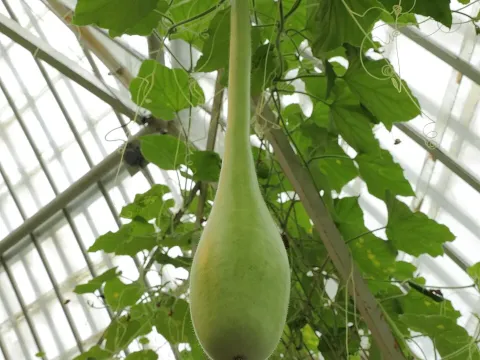
Bottle gourd
Lagenaria rufa
Bottle gourd (Lagenaria siceraria) is typically started from seeds indoors, especially in cooler climates, due to its long growing season of 150 to 200 days. Seeds should be sown in individual pots in late spring, around four weeks before the last expected frost date.
What the section contains
Bottle gourd
The seeds possess a hard, protective coat that requires scarification or soaking in warm water for 24 hours to improve germination rates. Maintaining a soil temperature of 22 to 25 degrees Celsius is critical for successful emergence of the seedlings.
In tropical and warm-temperate regions, direct seeding into the garden is possible once the soil is thoroughly warmed. However, the transplanting method remains standard for temperate zones to ensure the fruits have enough time to mature fully before the arrival of autumn chill.
Seedlings are sensitive to root disturbance, so using peat pots or biodegradable containers is highly recommended. This allows the root ball to remain intact during the transition to the garden bed, preventing transplant shock and ensuring vigorous initial growth.
Spacing is essential for this sprawling vine; each plant requires a significant area to thrive. When planting, maintain at least 1.5 meters between hills if training the vines on fences or trellises to ensure adequate airflow and light penetration for the foliage.
As a heat-loving plant of tropical origin, the bottle gourd demands a location with full, direct sunlight. It thrives best in warm climates and can be severely stunted by temperatures below 10 degrees Celsius, requiring a protected spot in cooler gardens.
Soil requirements include well-draining, nutrient-rich earth with a neutral pH level. While the plant can tolerate various soil types, sandy loam mixed with plenty of organic matter, such as compost or well-rotted manure, provides the best environment for root development.
Water management is vital; the plant requires consistent moisture, especially during the peak flowering and fruit-setting stages. However, avoid waterlogged conditions, which can lead to root rot and other fungal diseases, particularly in heavy soils.
Regular fertilization is beneficial for maintaining a high yield. A balanced liquid fertilizer or frequent additions of compost tea during the growing season will support the development of the long vines and the weight of the developing gourds.
Training the vines on strong supports is recommended. Elevating the fruits off the ground prevents rotting and allows the gourds to develop their characteristic shape, especially when grown as ornamental vessels or containers.
Yields of bottle gourd are highly variable depending on the environment and pruning practices. A healthy, well-maintained plant can produce between 10 to 15 large fruits, which come in a wide array of sizes and fascinating shapes.
One of the most impressive biological traits of the bottle gourd is the speed of its fruit growth. Under optimal conditions, the fruits can grow several centimeters per day, making the plant both highly productive and a fascinating subject for gardening.
The plant is widely used as a rootstock for grafting watermelons and cucumbers. This practice significantly boosts the yield of the scion plant, as the gourd's robust root system provides better nutrient uptake and enhanced resistance to soil-borne pathogens.
For culinary use, harvesting should occur while the gourds are young and immature. At this stage, the flesh is tender and similar to summer squash, making it a valuable vegetable crop in many traditional cuisines across the world.
In addition to food production, the plant serves an important decorative role. The dried, hardened shells of mature gourds are highly prized for crafts, kitchenware, and musical instruments, contributing to the overall utility of the harvest.
Powdery mildew is the most common threat to the foliage, especially during periods of high humidity and poor air circulation. It manifests as a white, dusty growth on leaves, which, if left untreated, can severely reduce the plant's photosynthetic capacity.
Root rot is a significant concern caused by overwatering or poorly drained sites. It often strikes the base of the stem, causing the entire plant to wilt suddenly, leaving gardeners with little time to respond once the infection is visible.
Pests such as aphids and spider mites frequently target the undersides of the leaves. These insects extract sap, causing leaves to curl, yellow, and wither, which weakens the plant and decreases its overall fruit-bearing potential.
Integrated pest management, including regular weeding and the use of organic insecticidal soaps, is effective in keeping pest populations low without harming the environment. Keeping the garden bed clean helps minimize the overwintering of pathogens.
Anthracnose can affect both fruits and stems, appearing as sunken, dark lesions. Prevention involves proper pruning for better aeration and ensuring that water is applied at the root zone rather than overhead, keeping the foliage as dry as possible.
Harvesting for food is done when the fruit is young, typically 20 to 30 centimeters in length. At this stage, the skin is soft, and the fruit is flavorful, making it an excellent ingredient for stir-fries, soups, and steamed dishes.
For ornamental or craft purposes, the harvest must be delayed until the fruit reaches full maturity. A key indicator of ripeness is when the stem begins to turn brown and shrivel, and the rind becomes hard to the touch.
It is best to harvest on a dry, sunny day to prevent mold from developing on the skin. Always leave a portion of the stem attached to the fruit, as this helps protect the gourd from decay while it cures during the storage process.
Curing requires a dry, well-ventilated location at room temperature for several weeks or even months. The fruit is fully cured when it feels light in the hand and the seeds can be heard rattling inside when the gourd is shaken.
Properly cured gourds are extremely durable and can last for many years. Because of their hard, woody shell, they are ideal for creating natural vessels, birdhouses, or traditional cultural artifacts, representing the final stage of the crop's utility.