
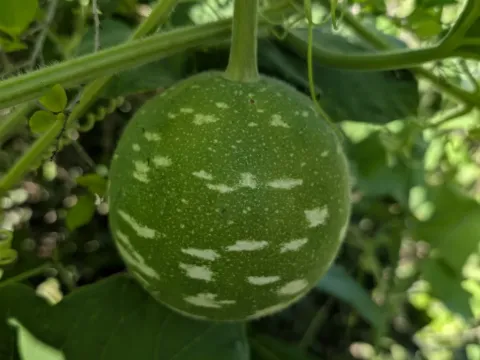
Lagenaria sphaerica
Lagenaria sphaerica
Sowing Lagenaria sphaerica seeds directly into the open ground should only occur after the risk of frost has passed and soil temperatures have reached at least 15 degrees Celsius.
What the section contains
Lagenaria sphaerica
In regions with shorter growing seasons, it is highly recommended to start seeds indoors in large individual pots about four weeks before the last expected frost date.
The seeds possess a very hard seed coat; therefore, scarification or pre-soaking in warm water for 24 hours is essential to ensure uniform and timely germination.
Transplanting should be done carefully to avoid disturbing the root system, as this crop is sensitive to root damage during the initial growth phase.
Proper spacing is crucial for this vigorous climber; plants should be set at least 1.5 to 2 meters apart to allow for maximum foliage development and airflow.
As a member of the Cucurbitaceae family, Lagenaria sphaerica thrives in full sun conditions, requiring at least six to eight hours of direct light daily.
The crop prefers well-drained, fertile soil rich in organic matter, with a pH balance between 6.0 and 7.0 for optimal nutrient uptake.
The species is highly sensitive to cold, and growth is most rapid during extended periods of warm weather, ideally between 25 and 30 degrees Celsius.
Adequate irrigation is necessary throughout the growing season, though it is vital to avoid waterlogging the soil to prevent root rotting and fungal issues.
Providing a strong trellis system is essential to support the weight of the developing fruit and to keep the vines off the ground for better disease control.
Powdery mildew is a frequent problem in humid conditions, characterized by a dusty white coating on the leaves which can eventually inhibit photosynthesis.
Anthracnose can cause sunken, necrotic spots on leaves and fruit, often appearing during periods of high rainfall and warm, stagnant air conditions.
Aphids are common pests that feed on the soft tissue of new shoots; regular monitoring of the underside of leaves is necessary for early detection.
Spider mites can become a severe problem during hot and dry spells, leading to yellowing of leaves and significant loss of plant vigor if left untreated.
- Apply organic fungicides as a preventive measure.
- Ensure adequate plant spacing for better airflow.
- Use row covers for young plants if necessary.
- Practice crop rotation with non-cucurbit species.
The timing of the harvest for Lagenaria sphaerica depends heavily on the intended use of the fruit, whether for culinary purposes or ornamental crafts.
For culinary applications, fruits should be harvested while immature, usually when they reach the desired size but before the skin becomes tough.
For decorative or utilitarian purposes, such as making containers, the fruits must be left on the vine until the stem turns brown and dry.
Using a sharp pruning tool ensures a clean cut, which helps prevent pathogen entry into the vine or the remaining fruit at the attachment point.
Once harvested for storage, the fruits should be cured in a warm, dry area with good ventilation to allow the skin to harden completely over several weeks.