
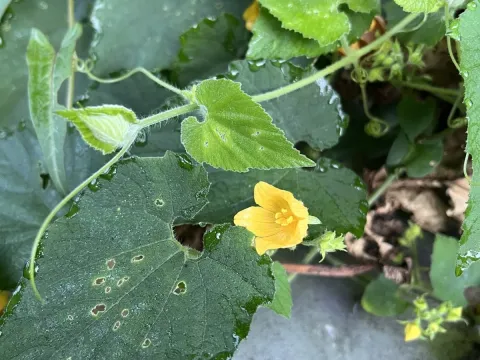
Thladiantha dubia
Thladiantha
Thladiantha dubia is a perennial dioecious vine belonging to the Cucurbitaceae family. Seeds should be sown in spring after a period of cold stratification to ensure high germination rates.
What the section contains


Thladiantha dubia
Vegetative propagation is more common and efficient, utilizing the tubers that the plant produces in large quantities. Planting should be done in early spring as soon as the soil warms up.
The root system of this plant is highly aggressive and spreads rapidly. It is recommended to bury physical barriers around the planting site to prevent the plant from taking over the garden.
When grown from seeds, the plants typically focus on root development during the first year and rarely produce fruit. Vegetatively propagated plants are more likely to flower in the same season.
Provide a spacing of 50 to 70 centimeters between plants to allow sufficient room for the sprawling vines to develop and climb effectively.
This culture thrives in full sun but tolerates partial shade. Its climbing habit makes it ideal for covering fences, trellises, or pergolas in vertical garden designs.
It adapts well to various soil types, though it performs best in loose, fertile loams. Proper drainage is essential to prevent the overwintering tubers from rotting during wet periods.
Sturdy support structures are necessary as the vine can reach heights of 5-6 meters. It uses tendrils to attach itself securely to any available climbing surface.
While the foliage dies back after the first frost, the underground tubers are winter-hardy and can withstand freezing temperatures even without deep mulching.
Watering should be regular, especially during dry spells, but excessive moisture should be avoided to protect the root system from fungal pathogens and rot.
Successful yield requires both male and female plants to be present in the garden, as cross-pollination is often limited in non-native habitats.
Manual pollination is a highly effective method to increase fruit set; simply brush a male flower against a female flower to ensure successful fertilization.
The fruits resemble small, hairy cucumbers that turn bright red and soft when fully ripe. They possess a mild, slightly sweet flavor when harvested at the right time.
In culinary applications, the fruits are often used for jams, jellies, or pickling, offering a unique exotic addition to traditional preserves.
The harvest season starts in August and continues until frost, making the plant a long-lasting productive element of the garden when managed correctly.
Common pests affecting the vine include aphids and spider mites, which are particularly prevalent during hot and dry summer weather conditions.
Powdery mildew is the most frequent disease, manifesting as a white, dusty layer on leaves. It is managed through proper spacing, ventilation, and the use of appropriate fungicides.
Root rot is a potential risk if the soil remains waterlogged, which is why choosing a well-drained site is a fundamental step in the initial planting process.
Regular monitoring of the foliage helps detect infestations early, allowing for effective organic or chemical interventions before the plant suffers significant damage.
Sanitation is key; remove all dead vine parts at the end of the season to prevent pathogens from overwintering on the organic debris in the garden.
Harvesting should be done selectively by picking only the fruits that have turned bright red and have become soft to the touch for optimal flavor.
Post-harvest life is very short, and the fruits tend to spoil quickly. It is highly recommended to process the harvest within 24 hours of collection.
Care must be taken during harvest to avoid damaging the vine's stems and tendrils, ensuring the plant remains healthy for continued production throughout the season.
Due to the short shelf life, fresh consumption or immediate cooking into jams is the most effective way to utilize the unique produce of this vine.
Consistent watering during the harvest period is beneficial, as it helps maintain the quality and juiciness of the remaining fruits on the vine.