
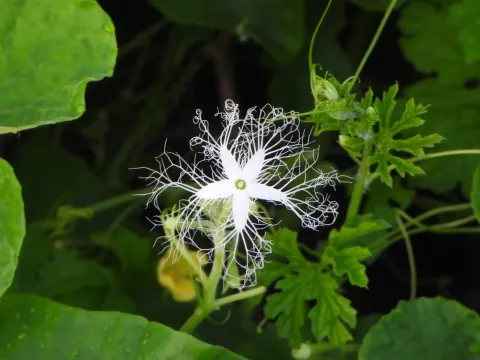
Trichosanthes
Trichosanthes
Trichosanthes is a genus of tropical plants belonging to the Cucurbitaceae family, widely known for its unique snake-like fruit shapes.
What the section contains


Trichosanthes
Cultivation usually starts with indoor seeding, as the plant requires a warm, frost-free environment to germinate and establish its initial root system.
The seeds should be sown in individual pots roughly one month before the last expected frost to allow for strong development before transplanting.
Soaking seeds in warm water for 24 hours prior to planting is a standard practice to soften the seed coat and significantly improve germination rates.
Seedlings need to be hardened off gradually before being moved outdoors to a permanent sunny location with well-prepared, nutrient-rich soil.
This crop thrives in hot climates and requires full sun exposure to ensure proper photosynthesis and the development of high-quality, long fruits.
The soil should be deep, well-draining, and rich in organic matter to sustain the plant's rapid growth and heavy foliage production throughout the season.
Vertical support systems like trellises or sturdy netting are essential for this climbing vine, as fruits must hang freely to maintain their straight shape.
Regular irrigation is critical during the flowering and fruit-setting stages, ensuring the ground remains moist but not waterlogged at all times.
Maintaining an ambient temperature between 25 and 30 degrees Celsius is ideal for maximum growth, as colder conditions will lead to growth stunting.
The yield of Trichosanthes depends largely on effective pollination, which can be done naturally by bees or manually to ensure maximum fruit sets.
With proper nutrition and support, a single healthy vine can produce numerous fruits that can grow up to a meter in length throughout the harvest period.
Regular harvesting of mature but still tender fruits helps signal the plant to direct its energy into producing more flowers and subsequent fruit.
Commercial yields are often optimized in controlled greenhouse environments where temperature, humidity, and pollination can be precisely managed.
The fruit is highly valued for its crisp texture and mild flavor, making it a popular ingredient in various Southeast Asian cuisines and salads.
Common pests include spider mites and aphids, which are particularly troublesome during hot, dry spells and can significantly weaken the vine.
Fungal diseases like powdery mildew pose a major threat, often appearing when air circulation is poor or humidity levels remain consistently high.
Implementing good cultural practices, such as pruning excessive foliage and ensuring proper spacing, is the best strategy for disease prevention.
Using integrated pest management, including beneficial insects or organic sprays, helps keep pest populations under control without chemical residue.
Monitoring for signs of root rot is essential, especially in areas with heavy rainfall or where irrigation management is not carefully calibrated.
Harvesting usually begins about 70 to 90 days after sowing, once the fruits have reached the desired size but before they become tough or fibrous.
The fruits should be cut from the vine using a clean blade to avoid damaging the plant or leaving entry points for potential pathogens to spread.
Post-harvest, the fruits should be kept in a cool, shaded area as they have a relatively short shelf life and tend to wilt if kept in direct sunlight.
Frequent picking ensures that the harvest remains consistent and that the fruits are eaten at their peak flavor and textural quality for the consumer.
Since the fruits ripen continuously, growers should conduct daily checks during the peak season to ensure no fruits are missed or allowed to over-mature.