
Costus mosaicus
Costus mosaicus
Costus mosaicus is a distinct species belonging to the Costaceae family. It is native to tropical habitats, primarily found in Southeast Asia, where it thrives in the dappled sunlight of rainforest understories.
What the section contains
Costus mosaicus
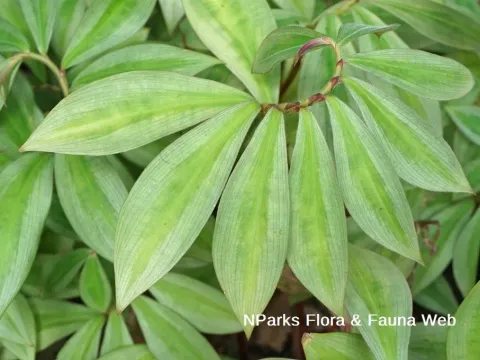
This species is characterized by its spirally arranged leaves, which feature a unique mosaic-like pattern. Botanically, it relies on a rhizomatous root system to survive and propagate under competitive forest floor conditions.
To cultivate this plant successfully, one must replicate its native tropical environment. It requires a temperature range of 22 to 28 degrees Celsius and strictly avoids temperatures below 18 degrees Celsius.
The soil must be rich in organic matter, slightly acidic, and well-draining. A mixture of peat, perlite, and coarse organic compost is recommended to ensure both moisture retention and aeration.
High relative humidity, ideally above 70%, is essential for the plant to maintain its vibrant appearance and prevent the leaf edges from drying out or turning brown.
Spider mites are the most common pests affecting Costus mosaicus, particularly in indoor environments where the air is dry. Regular misting can help prevent infestations.
Root rot is a severe threat, typically caused by overwatering or poor drainage systems. This fungal issue can compromise the rhizome, often leading to rapid decline.
Mealybugs are another group of pests that can cluster in the leaf axils, sucking nutrients and weakening the overall health of the specimen.
Fungal leaf spots can manifest when the plant is kept in areas with stagnant air and insufficient light levels, promoting pathogen proliferation.
Proper sanitation and integrated pest management practices are necessary to ensure that the plants remain vigorous and free from systemic infections throughout their lifespan.