
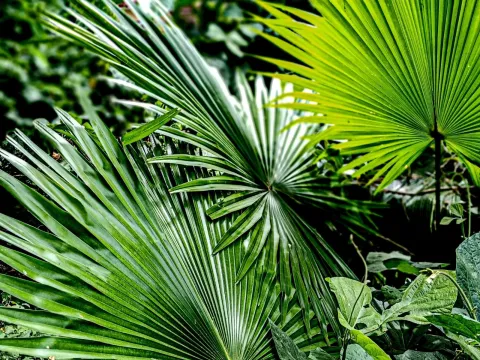
Corypha rotundifolia
Corypha rotundifolia
Corypha rotundifolia is an impressive palm species belonging to the Arecaceae family. It is native to the tropical regions of Southeast Asia, where it thrives in humid environments, typically found in coastal areas and tropical forests.
What the section contains
Corypha rotundifolia
The plant requires a strictly tropical climate with warm temperatures year-round. It is highly sensitive to cold and frost, which limits its commercial cultivation to specific latitudes where the climate remains warm and humid throughout the seasons.
Regarding soil requirements, the species prefers well-draining, nutrient-rich soil. While it appreciates moisture, it cannot tolerate waterlogging, which often leads to root damage; therefore, ensuring high-quality drainage in the planting area is essential.
Sunlight exposure is a critical factor for the growth of Corypha rotundifolia. Young plants are adapted to partial shade in the understory of forests, but mature specimens require ample, bright light to produce their signature large, fan-shaped leaves.
Agrotechnical management involves moderate fertilization to support steady growth. Because the palm grows slowly, excessive application of fertilizers should be avoided to prevent burning the roots and to maintain a balanced nutrient uptake.
The primary economic use of Corypha rotundifolia is the harvesting of its leaves. These leaves are exceptionally large and robust, making them highly valued for various traditional and industrial crafting purposes.
Local communities utilize the fibrous leaves to weave hats, baskets, and floor mats, as well as for roofing materials due to their water-resistant properties. The harvesting process involves selective cutting of mature leaves to ensure the palm's continued vitality.
As a monocarpic species, the palm will flower and produce fruit only once before it dies. This biological cycle dictates the harvest management, as the palm's life span is finite and concludes with its reproductive phase.
Beyond traditional use, the palm serves an important function in landscaping. It is highly sought after by botanical gardens and large-scale tropical resorts for its aesthetic value and architectural presence in the landscape.
Research into the starch content of the palm trunk has historically existed, but its significance in modern agriculture remains secondary to the value derived from its sustainable leaf production.
Common diseases in Corypha rotundifolia are often triggered by improper irrigation practices. Root rot is the most significant threat, typically caused by water accumulation, which promotes the growth of harmful soil-borne pathogens.
Pests such as spider mites are a major concern, particularly in dry environments or indoor settings where humidity levels drop. These pests feed on the leaf tissues, causing visible yellowing and reduced photosynthetic efficiency.
Mealybugs and scale insects may also infest the plant. These pests suck the sap from the fronds and can weaken the plant over time if left untreated. Regular inspections of the undersides of the leaves are recommended for early detection.
Fungal leaf spots can develop under conditions of poor ventilation. Providing adequate spacing and promoting airflow around the canopy are effective cultural practices for reducing the risk of fungal infections.
Maintenance includes periodic sanitary pruning to remove damaged or necrotic fronds. Always use sterilized cutting tools to avoid cross-contamination of pathogens, which is vital for maintaining a healthy palm population.