
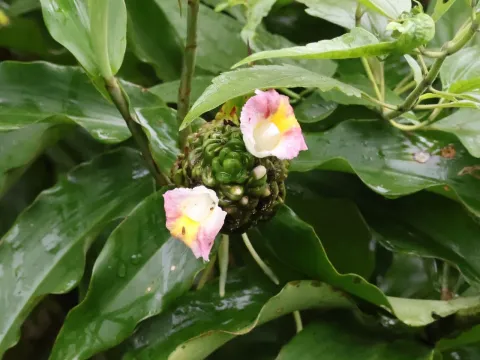
Costus afer
Costus afer
Costus afer, commonly known as the spiral ginger, is a perennial herbaceous plant belonging to the Costaceae family. It is native to tropical regions of West and Central Africa, where it thrives in shaded and humid environments.
What the section contains
Costus afer
The plant grows best in moist, well-draining soil that is rich in organic matter. Because it is a forest-floor species, it requires partial shade and protection from intense direct sunlight, which can cause leaf scorch and dehydration.
Temperature requirements are strictly tropical, ranging between 22°C and 30°C. Costus afer is highly sensitive to cold stress and frost, making it unsuitable for outdoor cultivation in temperate zones without controlled greenhouse conditions.
For soil management, maintaining a slightly acidic pH is beneficial for nutrient uptake. Given its natural habitat, the soil must remain consistently damp, but waterlogging must be avoided to prevent root rot, which is the most common physiological challenge.
Propagation is typically achieved through rhizome division or stem cuttings. Using vigorous, healthy rhizomes ensures a higher success rate during establishment, and regular application of compost enhances the growth speed and biomass production.
Costus afer has significant economic importance primarily due to its widespread use in ethnomedicine. Various parts of the plant, including leaves, stems, and rhizomes, contain bioactive compounds valued for their pharmacological properties.
Harvesting for medicinal use generally involves collecting mature leaves during the peak vegetative period. The rhizomes are harvested manually to ensure they remain intact, as they serve as the storage organs for many essential phytochemicals.
Post-harvest processing is critical to maintaining the quality of the raw material. Immediate cleaning and drying in controlled temperatures prevent the growth of molds and the degradation of active chemical constituents.
The plant also shows potential as a source of biomass in specific agro-forestry systems. Its ability to tolerate low light makes it an ideal candidate for intercropping beneath larger canopy trees in tropical plantations.
Careful field management and sanitation during the harvesting process significantly contribute to the long-term sustainability of the culture, ensuring high-quality yield for the pharmaceutical and processing sectors.