
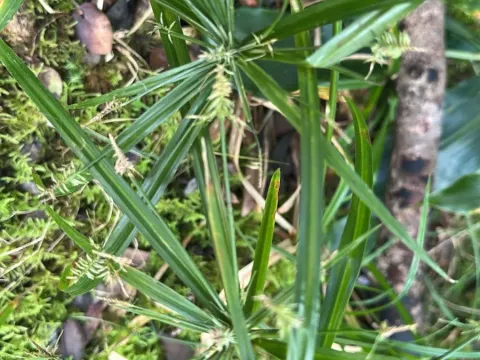
Courtoisina
Courtoisina
Sowing of Courtoisina is primarily carried out in the spring period, once the soil has warmed to a temperature of 12–15 degrees Celsius. To obtain uniform germination, the seeds require pre-treatment, including stratification or soaking in growth stimulants.
What the section contains
Courtoisina
The optimal planting depth for the seeds is no more than 1–2 centimeters, due to their fine-grained structure. It is crucial to maintain stable moisture levels in the top layer of the soil during the first two weeks after sowing.
Sowing patterns are chosen depending on the intended use: when growing for green mass, a row method with 15 cm spacing is applied. If seed production is the goal, the distance between rows is increased to 45 cm to allow for better aeration.
Courtoisina is characterized by slow initial growth, so it is critically important to manage weed competition during the early stages. Herbicide treatments should be performed with caution, considering the sensitivity of young seedlings.
In regions with a short growing season, a seedling-based approach is recommended. This allows the crop to become well-established before the onset of summer heat or autumn frosts.
Courtoisina belongs to the Cyperaceae family and is a typical hygrophyte. For normal development, the plants require excess moisture, so the crop adapts well to waterlogged and even marshy soil conditions.
The crop prefers fertile soils rich in organic matter with an acidic or neutral pH. It responds well to nitrogen fertilizers, which stimulate the intensive growth of vegetative mass.
Light levels play a significant role: Courtoisina is a light-loving plant that loses productivity in significant shade. Under intense sunlight, the plant forms a more powerful root system.
The temperature regime for the crop should be in the range of 20–28 degrees Celsius. The plant does not tolerate prolonged periods of drought, requiring the organization of systematic irrigation or drip watering during hot months.
Soil structure should be loose to allow roots to penetrate deep into the substrate. In its natural habitat, it is often found along the banks of water bodies, which dictates the need to maintain high soil moisture levels.
The yield of green mass for Courtoisina strongly depends on the level of agronomic management and moisture availability. With intensive irrigation and mineral fertilization, productivity can reach high levels, comparable to some types of forage grasses.
The peak of biomass accumulation occurs during the flowering phase, when the plant reaches its maximum height. During this period, the nutrient content in the leaves and stems is most balanced for forage use.
The secondary regrowth (aftermath) after the first cut develops more slowly, so the number of full harvests per season rarely exceeds two. To increase seed yield, it is necessary to leave part of the fields until the generative organs fully mature.
Quality of the harvest is determined by weed purity and the absence of pest damage. With proper care, Courtoisina is capable of maintaining high productivity for several years on the same plot.
The minimal level of productivity in extensive cultivation is only justified when using the plant as a phytoremediator. In such cases, productivity is evaluated not by mass weight, but by the plant's ability to clean the soil.
The main danger to Courtoisina comes from fungal diseases that develop against the background of high soil and air humidity. Powdery mildew infection is often observed, especially in dense plant stands.
Root rot is a serious threat during water stagnation and the lack of proper soil aeration. For prevention, it is necessary to follow crop rotation and avoid compaction of the topsoil horizon.
Among pests, larvae of various insects inhabiting the root zone cause the most significant damage. Aphid infestation is also possible, as they suck juices from young shoots, weakening the plant's immune system.
Nematodes pose a hidden threat, as they damage the root system, leading to stunted growth and leaf yellowing. Control is difficult and requires the use of specialized preparations or biological protection methods.
To minimize risks, it is recommended to use resistant varieties if available on the market and to perform timely preventive treatments with broad-spectrum fungicides.
Harvesting of the green mass is conducted during the budding phase while the stems remain juicy and have not yet turned coarse. Delaying the cut leads to a sharp decrease in nutritional value due to the accumulation of lignin.
For cutting, specialized mowers are used, set to a height of 5–7 centimeters from the soil surface. This is necessary to ensure rapid regrowth of the secondary foliage after the harvest.
If seeds are required, harvesting is performed at the moment the spikelets turn brown to avoid shattering. Seed plots require delicate handling: they are harvested manually or with gentle mechanized tools.
After harvest, the plant material requires quick drying or processing. If silage is planned, it is necessary to ensure the correct moisture content of the raw material for high-quality lactic acid fermentation.
Storage of the harvested product should be carried out in ventilated areas with low humidity. This prevents the development of mold and preserves the nutritional value of the collected harvest for an extended period.