
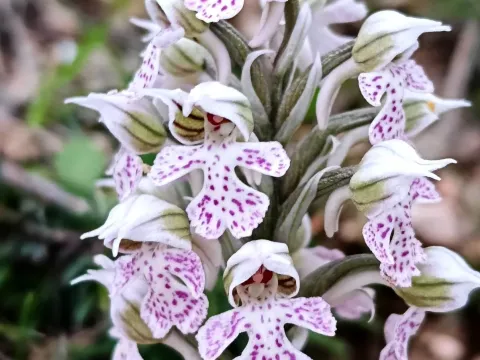
Corsican orchid
Orchis corsica
The Corsican orchid (Orchis corsica) is a perennial herbaceous plant belonging to the Orchidaceae family. It is an endemic species primarily found on the islands of Corsica and Sardinia, favoring specific ecological niches in the Mediterranean region.
What the section contains
Corsican orchid
Botanically, the plant is characterized by the presence of two tuberous roots that store essential nutrients for dormancy. The stem typically reaches heights of 15 to 40 centimeters, supporting a dense spike of pink or purple flowers that bloom in late spring.
Regarding climate, this species thrives in typical Mediterranean conditions, characterized by mild, wet winters and hot, dry summers. It prefers sun-drenched locations, such as open mountain meadows, rocky slopes, and light woodlands.
Soil requirements are quite specific, favoring well-drained, slightly acidic to neutral substrates. The presence of gravel or rocky material is essential to prevent waterlogging, which can be detrimental to the plant's delicate tuberous root system.
It is important to note that the Corsican orchid is not an agricultural crop. It holds significant value for environmental conservation and biodiversity, and its cultivation is restricted to research or protected botanical settings rather than commercial farming.
The main threats to the Corsican orchid population include habitat destruction caused by land-use changes and intensive livestock grazing in mountain areas. These activities disrupt the soil surface and crush developing plants.
Pathogens, particularly fungal infections leading to tuber rot, are common when soil moisture remains too high during the dormant period. Pests such as larvae of certain insects may feed on foliage and floral buds, reducing overall plant health.
A major biological threat is the dependence on specific mycorrhizal fungi in the soil. Without these symbiotic partners, the seeds of the Corsican orchid are unable to germinate or survive the initial stages of development.
Human activities, including illegal collection and habitat encroachment, significantly deplete wild populations. Conservation efforts are focused on protecting natural sites and preventing the removal of specimens from their native habitats.
Climate instability and shifts in rainfall patterns negatively impact the plant's reproductive cycle. Extended periods of drought or unseasonal moisture can hinder successful pollination and seed production, threatening the long-term survival of local populations.