
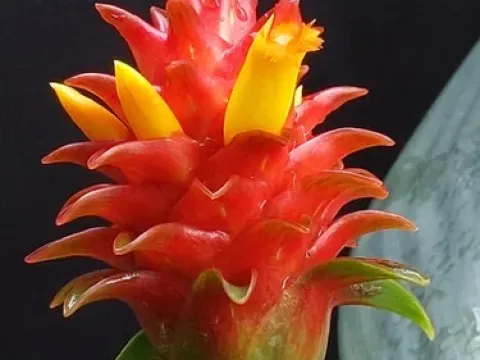
Costus productus
Costus productus
Propagation of Costus productus in a professional agricultural setting is primarily achieved through vegetative methods, specifically rhizome division or stem cuttings.
What the section contains
Costus productus
The ideal time for planting occurs at the onset of the active growing season when soil temperatures consistently remain above 20-22 degrees Celsius.
When using seeds, which is less common due to slow germination rates, sowing is carried out in specialized greenhouse substrates with excellent aeration.
Maintaining high air humidity during the first few weeks after planting is a critical requirement for successful root establishment and sprout development.
In regions with distinct seasonal changes, planting is scheduled to ensure the plant forms a robust root system before the onset of the short-day period.
Costus productus belongs to the Costaceae family and originates from tropical rainforests, which dictates its specific environmental requirements.
The plant thrives in humus-rich, loose, and slightly acidic soils that have the capacity to retain moisture without the risk of waterlogging in the root zone.
Optimal growth requires temperature ranges between 24 and 28 degrees Celsius; temperatures falling below 15 degrees are detrimental to the crop.
The plant prefers filtered or indirect sunlight, as harsh midday rays can cause damage to the large, characteristic leaves of this species.
Regular fertilization with complex mineral fertilizers, focusing on nitrogen levels during the green mass development phase, improves market quality.
Costus productus is highly valued as a productive resource for the floral industry and for interior phytodesign applications.
Yield is measured by the number of high-quality marketable stems, typically achieved with a planting density of 4 to 6 plants per square meter.
Under intensive management, a single mature plant can produce 3 to 5 high-quality flowering stems during one growth cycle.
Yield is directly proportional to the quality of the substrate and the consistency of the irrigation regime, as stress factors significantly reduce flower formation.
Peak productivity for this crop is usually reached in the second or third year after planting, once the rhizome has fully occupied the available soil volume.
The most significant pests for Costus productus include spider mites and mealybugs, which become particularly problematic in low-humidity environments.
Fungal diseases affecting the root system often arise from overwatering combined with poor ventilation, leading to stem or root rot.
Prevention involves regular monitoring and prophylactic treatments with systemic insecticides suitable for tropical ornamental flora.
Ensuring proper air circulation within the growing area is essential for minimizing the risk of pathogen spread, especially in controlled environments.
Strict quarantine of incoming planting material is necessary, as this species can be susceptible to various tropical viruses that affect its growth.
Harvesting of stems is performed when the inflorescence reaches optimal maturity, specifically when it is at its most attractive stage.
The tools used for harvesting must be disinfected to prevent the transmission of pathogens through fresh wounds on the stems.
Immediately after cutting, stems are placed in water with preservatives to maintain freshness and prolong their shelf life during distribution.
Harvesting is best conducted in the early morning when the plant tissue is saturated with moisture, ensuring maximum turgor and durability.
Following the harvest, sanitary pruning of the remaining rhizome helps stimulate the next cycle of vegetation and flower production.