
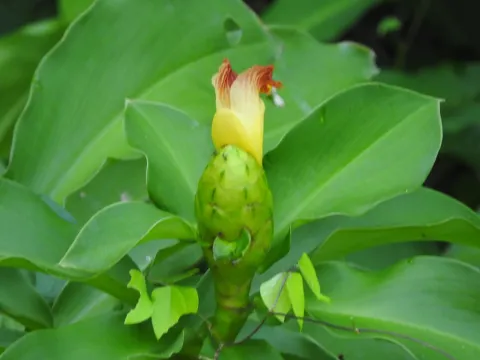
Costus pictus
Costus pictus
Costus pictus, widely known as the insulin plant, belongs to the Costaceae family. Native to the tropical regions of Mexico and Central America, this perennial plant is celebrated for its medicinal properties and unique spiral growth pattern of its leafy stems.
What the section contains
Costus pictus
Botanically, the plant grows from robust rhizomes that store nutrients and allow it to propagate efficiently. Its leaves are alternate, simple, and typically feature dark green surfaces, sometimes with reddish or silver undersides depending on the environmental conditions.
Climate requirements for this species are strict, as it thrives in tropical conditions. It requires high humidity and consistent temperatures, ideally between 20°C and 30°C. Direct sunlight should be avoided as it can scorch the foliage; bright, indirect light is preferred for optimal leaf development.
Soil composition must be rich in organic matter and possess excellent drainage capabilities. A mixture of loam, peat, and coarse sand provides the necessary structure to prevent waterlogging, which the species dislikes intensely despite its preference for humidity.
Agricultural management includes balanced fertilization during the active growing season. Nitrogen-rich fertilizers help in promoting the lush foliage growth, which is essential if the plant is being harvested for its medicinal leaves.
Spider mites are the most common pest affecting Costus pictus in greenhouse environments. These pests thrive in dry conditions and can cause significant damage to the leaf structure, leading to stunted growth and yellowing of the foliage.
Mealybugs are another prevalent concern, often clustering in the leaf axils or along the spiral stems. Their presence is easily identified by white, cotton-like masses, and they can be controlled using neem oil or systemic insecticides if the infestation is severe.
Fungal infections, particularly root rot, are the most common pathological threats. This occurs primarily due to poor drainage or excessive irrigation, leading to the decay of the rhizome and systemic collapse of the stem.
Leaf spot diseases, caused by various fungi, may emerge if the plant is kept in an environment with poor air circulation. Sanitation practices, such as removing infected leaves and maintaining adequate space between plants, are vital.
Regular monitoring of plant health is crucial to maintain high yields of healthy leaf biomass. By balancing moisture levels and ensuring good ventilation, producers can minimize the need for heavy chemical intervention against pests and diseases.