
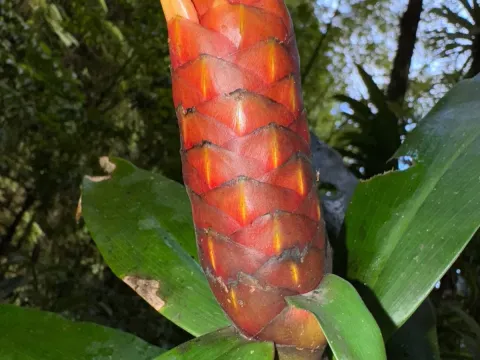
Costus spicatus
Costus spicatus
Costus spicatus, commonly known as spiral ginger, is a perennial herbaceous plant belonging to the Costaceae family. It is native to the tropical regions of Central and South America, characterized by its distinctive spiral stems and inflorescences.
What the section contains
Costus spicatus
The plant thrives in warm, humid conditions with temperatures ideally between 20 and 28 degrees Celsius. It is highly sensitive to frost and cold drafts, requiring greenhouse or indoor cultivation in temperate regions.
Soil requirements involve a rich, well-draining organic medium. A mixture of peat, perlite, and compost provides the necessary acidity and structure to support the robust rhizomatous root system of the plant.
Hydration is a cornerstone of the agrotechnics for this species. The soil must remain consistently moist, and the plant benefits significantly from high atmospheric humidity, often provided by misting or ultrasonic humidifiers.
Fertilization is best performed during the active growing season using a balanced NPK fertilizer. Regular feeding promotes healthy foliage development and robust production of the characteristic red, spiky bracts.
Root rot is the most significant threat to Costus spicatus, usually triggered by poor drainage or excessive watering during dormant periods. Ensuring proper drainage holes in containers is essential for plant health.
Pests such as spider mites, aphids, and mealybugs often target the undersides of leaves, especially when the indoor environment becomes too dry or stagnant.
Fungal leaf spot diseases may appear if the foliage stays wet for prolonged periods without adequate air circulation, leading to unsightly blemishes and tissue decay.
Integrated pest management strategies should include regular inspection of the plants and mechanical removal of infected parts before applying chemical controls.
Using sterile soil components during repotting helps minimize the risk of soil-borne pathogens, ensuring a cleaner environment for the rhizomes to develop.