
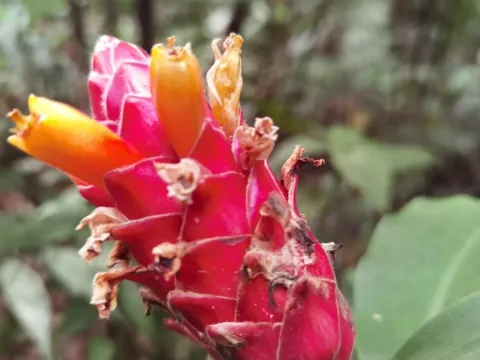
Costus barbatus
Costus barbatus
Costus barbatus, commonly known as spiral ginger, belongs to the Costaceae family. Native to the humid rainforests of Costa Rica, it is a rhizomatous perennial valued for its striking, waxy red inflorescences.
What the section contains
Costus barbatus
The plant thrives in tropical environments with consistent temperatures between 20°C and 30°C. It is strictly frost-tender and requires controlled conditions in climates outside of its native equatorial range.
Cultivation requires rich, well-draining soil that is high in organic matter. Maintaining a slightly acidic pH is beneficial for nutrient uptake and overall plant vigor during the growing season.
High humidity and consistent moisture are essential for the survival of the plant. It does not tolerate prolonged drought, which often leads to foliage desiccation and poor development of the spiral stems.
Bright, indirect light is optimal for Costus barbatus. Direct exposure to intense sunlight can damage the leaves, while insufficient light may result in leggy, weak stems that fail to produce flowers.
Spider mites are the most common pests in indoor or greenhouse settings. They thrive in dry conditions and can cause significant damage to the leaves by piercing the epidermis.
Mealybugs are another prevalent threat, often hiding in the dense bracts of the flower or between the stem and leaf sheath. Regular inspection and systemic insecticide treatments are necessary for control.
Root rot, caused by overwatering and poor soil drainage, is a lethal issue for the rhizome. Proper pot selection and a well-structured substrate are the primary preventative measures.
Fungal infections, such as leaf spot, can occur in environments with poor air circulation and excessive foliage wetness. Ensuring proper spacing between plants helps to reduce humidity-related disease risks.
In addition to these, scale insects can infest stems. Integrated pest management, focusing on early detection and biological control, is highly recommended to maintain plant health.