
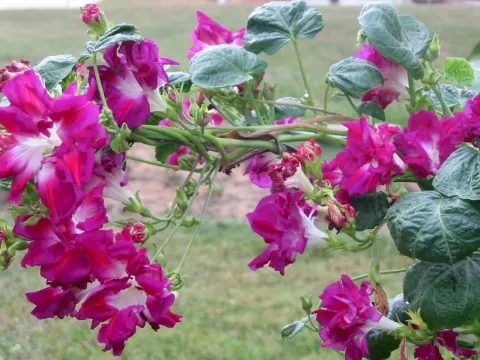
Imperial Morning Glory
Ipomoea imperialis
Imperial Morning Glory (Ipomoea imperialis) is a vigorous ornamental vine belonging to the Convolvulaceae family. Direct sowing into the open ground should be performed only after the danger of frost has passed in late spring.
What the section contains
Imperial Morning Glory
For regions with shorter growing seasons, starting seeds indoors is recommended. Seeds should be sown in individual peat pots during early spring to minimize root disturbance, as the plant is sensitive to transplanting.
Seed preparation is crucial for success. Soaking seeds in warm water for 24 hours or performing mechanical scarification helps to breach the tough seed coat, ensuring uniform and faster germination.
The seeds should be planted at a depth of 1–2 centimeters. A light, well-draining, and nutrient-rich potting mix is ideal for providing the necessary support for early seedling development.
Maintaining a temperature range of 20–22 degrees Celsius is optimal for the germination process. Under these controlled conditions, seedlings typically emerge within 7 to 12 days after the sowing date.
Imperial Morning Glory thrives in warm, sunny environments and requires a location with full sun exposure. At least six hours of direct sunlight daily are essential for the production of its characteristic large flowers.
The soil should be loose, fertile, and have a neutral pH. While the plant is adaptable, extremely nitrogen-rich soils will favor excessive foliage development, which can suppress the onset of the flowering phase.
Providing sturdy support is a key agronomic requirement. As a climbing vine, it requires trellises, netting, or tensioned wires to facilitate upward growth and prevent the vines from tangling on the ground.
Regular watering is necessary, especially during periods of active growth. However, care must be taken to ensure the soil remains moist but not waterlogged, as poor drainage frequently causes root rot.
The plant performs best in sheltered areas protected from strong winds. Exposure to high-speed winds can tear the large leaves and damage the delicate stems, significantly reducing the plant's overall aesthetic value.
The most common pest affecting Imperial Morning Glory is the spider mite, which thrives in hot and dry conditions. Regular monitoring of the leaf undersides is essential for early detection of these pests.
Aphids are also a frequent nuisance, attacking young shoots and buds. Effective control involves using insecticidal soaps or systemic pesticides once an infestation is identified to maintain plant vigor.
Fungal diseases, including various types of stem and root rots, are often associated with overwatering or poor air circulation. Proper spacing between plants is critical to ensure adequate airflow and prevent humidity buildup.
Viral infections can manifest as mottled leaves or distorted growth. Since there is no cure for these diseases, it is standard practice to remove and dispose of affected plants immediately to protect the rest of the crop.
Maintenance of general garden hygiene, including the removal of nearby weeds that may act as alternate hosts, is a fundamental aspect of the integrated pest management strategy for this species.