
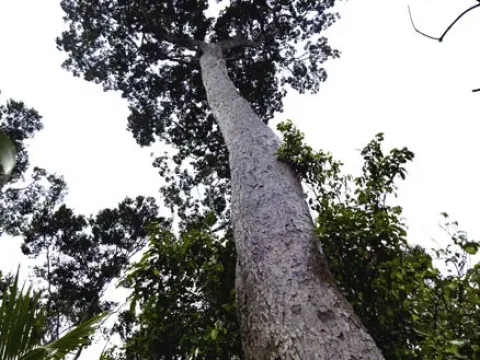
Humbertia
Humbertia
Humbertia madagascariensis is a unique tree species belonging to the Convolvulaceae family, which is primarily known for its vining plants.
What the section contains

Humbertia
Propagation is typically performed via seeds, which require specific nursery conditions including high humidity and warm temperatures to germinate effectively.
Sowing in the field should coincide with the onset of the rainy season to ensure that young seedlings have sufficient water to establish roots.
The planting substrate should be rich in organic matter and possess excellent drainage properties to prevent the decay of developing seeds.
For better results, experts recommend treating the seed coat before sowing to facilitate moisture absorption and speed up the germination process.
As a native of Madagascar, the plant demands a tropical climate with consistent temperatures and minimal fluctuations throughout the year.
Humbertia thrives in areas with high annual precipitation and requires a environment that replicates the humidity of its natural rainforest habitat.
The soil must be deep and well-drained, avoiding compacted surfaces that limit the aeration necessary for the health of its root system.
Exposure to direct sunlight is generally preferred for adult trees, while seedlings may require partial shade during the initial growth stages.
It is sensitive to cold weather, making it unsuitable for cultivation in temperate zones unless protected within specialized greenhouses.
Humbertia is primarily valued for its durable and high-quality timber, which has been historically utilized in local woodworking industries.
The harvesting process involves the selective logging of mature trees, ensuring that the surrounding ecosystem remains balanced and healthy.
Once harvested, the wood undergoes controlled seasoning processes to ensure its structural integrity and beauty for final end-use applications.
Applications include high-end furniture manufacturing and specialized construction, thanks to the wood's inherent resistance to decay and insects.
Sustainability is the cornerstone of the agricultural approach to Humbertia, given its status as a unique and localized botanical resource.