
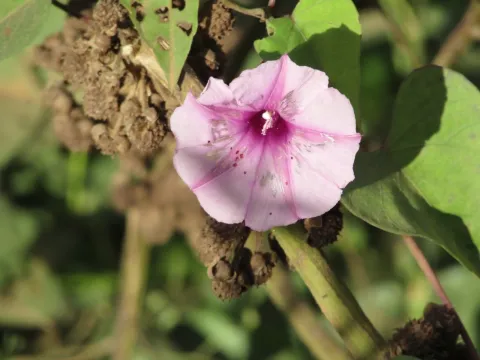
Ipomoea acanthocarpa
Ipomoea acanthocarpa
Ipomoea acanthocarpa is an annual herbaceous species that demonstrates specific germination requirements linked to soil temperature and moisture levels.
What the section contains
Ipomoea acanthocarpa
Seed germination typically initiates when soil temperatures consistently reach +18°C to +22°C, usually during the mid-to-late spring season.
Proper depth of seed placement is critical; shallow sowing, ideally at 2-3 cm, ensures the seedling has enough energy to reach the soil surface quickly.
This species exhibits a staggered germination pattern, which is a survival strategy that allows the plant to emerge even if early-season conditions are unfavorable.
Effective agricultural management involves creating false seedbeds to trigger germination followed by secondary tillage to eliminate seedlings before crop planting.
As a member of the Convolvulaceae family, this plant thrives in warm, temperate climates and requires substantial sunlight to achieve its full growth potential.
The plant prefers well-drained, fertile soil, though it shows a degree of plasticity in adapting to various soil textures from sandy loams to heavier clays.
Adequate soil fertility is essential, as Ipomoea acanthocarpa shows a significant growth response to nitrogen levels, which stimulate rapid vegetative development.
Water requirements are moderate, with the plant being capable of surviving short-term moisture deficits due to an efficient root system.
The ideal environment includes a long growing season with high heat unit accumulation, which prevents premature senescence of the foliage.
Common agricultural threats include fungal pathogens such as powdery mildew, which thrive in humid conditions and can severely damage leaf surface area.
Spider mites and aphids are frequently observed pests that feed on the foliage, causing chlorosis and reducing the overall vigor of the plant.
Root rots can be problematic in fields with poor drainage or during prolonged periods of heavy rainfall, often leading to rapid plant decline.
Stem-boring insects may cause mechanical damage, which often facilitates the entry of secondary pathogens, compromising the vascular integrity of the plant.
- Integrated pest management (IPM) protocols.
- Crop rotation to break the lifecycle of specific pests.
- Monitoring soil moisture to prevent waterlogged conditions.