
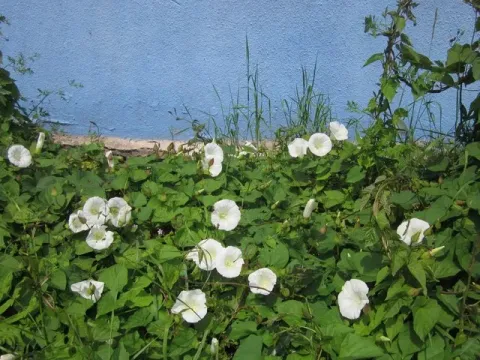
Hybrid bindweed
Calystegia hybrids
Hybrid bindweed belongs to the Convolvulaceae family. It is a perennial herbaceous vine known for its vigorous growth habits and ability to climb effectively using twining stems.
What the section contains
Hybrid bindweed
The plant thrives in locations with full sunlight exposure, which is critical for maximizing flower production and maintaining strong stem growth throughout the growing season.
Well-drained, fertile soil with a neutral pH is optimal for this species. It requires consistent moisture levels but must be protected from waterlogged conditions to prevent root rot.
Vertical supports are essential for the proper cultivation of this vine. Gardeners should provide sturdy trellises or fences to manage the rapid spread of the stems.
Regular fertilization with balanced nutrients promotes lush foliage and numerous blooms. It is recommended to apply organic matter annually to sustain the soil structure and fertility.
Powdery mildew is a common fungal disease that affects foliage during periods of high humidity and poor air circulation, requiring appropriate fungicidal treatment.
Spider mites are significant pests that thrive in dry, hot weather, causing the leaves to turn yellow and eventually drop if the infestation remains uncontrolled.
Aphids can cause damage to tender new growth and developing flower buds, necessitating the use of systemic insecticides or horticultural oils to protect the plant.
Root rot occurs if the plant is grown in compacted or overly wet soil. Ensuring proper site preparation and drainage is the primary method of preventing this condition.
Regular monitoring for early signs of disease and pest activity is crucial for maintaining the health of the hybrid bindweed, especially when grown as a dense screen.