
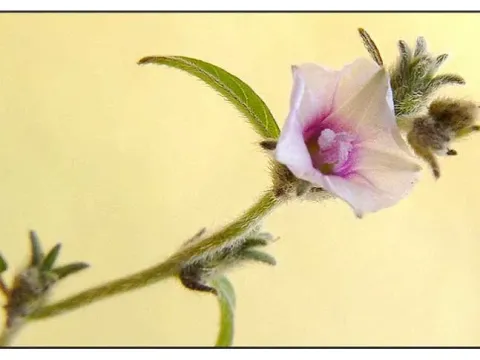
Hairy morning glory
Ipomoea hispida
The Hairy morning glory (Ipomoea hispida) is a vigorous annual climbing plant belonging to the Convolvulaceae family, known for its rapid growth in summer climates.
What the section contains
Hairy morning glory
For indoor propagation, seeds should be sown in trays during March, ensuring a frost-free environment until the plants are ready for permanent transplanting.
To improve germination rates, scarifying the seed coat slightly or soaking the seeds in warm water overnight is a recommended practice in agricultural management.
Direct outdoor sowing is suitable only when the soil temperature consistently reaches 20 degrees Celsius, ensuring no risk of late spring frost damaging the young shoots.
Spacing should be maintained at about 40 centimeters apart to allow sufficient airflow and prevent the development of moisture-related diseases during the peak growing season.
This crop thrives in full sun conditions, requiring at least six hours of direct sunlight daily to produce high-quality foliage and abundant flowering throughout the season.
The soil should be well-drained and nutrient-rich, with a slightly acidic to neutral pH level being optimal for nutrient uptake and overall plant vigor.
Watering management is crucial; the soil must be kept consistently moist but not waterlogged, as excessive standing water significantly increases the risk of root rot.
Structural support is essential for this species; trellises, fences, or netting must be installed before the plant starts to vine aggressively to ensure proper vertical orientation.
Regular fertilization with a balanced mix is advised, but gardeners should avoid high-nitrogen fertilizers that encourage leafy growth at the expense of floral development.
Spider mites represent a major threat, particularly in hot and dry climates, where they proliferate on the undersides of leaves and cause severe chlorosis.
Aphid infestations can quickly become a problem, sucking sap from stems and buds, and often acting as vectors for viral diseases that inhibit plant growth.
Fungal diseases like powdery mildew often emerge when environmental humidity is high and airflow between plants is restricted, leading to white spotting on leaves.
Root pathogens are largely preventable through sound soil management and by avoiding over-irrigation in poorly draining soil conditions within the field or garden.
Effective pest and disease management requires a proactive approach, including regular scouting and the use of targeted treatments to minimize damage to the vine health.