
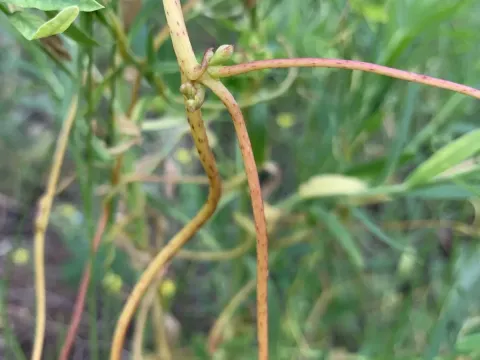
Cuscuta monogyna
Cuscuta monogyna
Cuscuta monogyna is a parasitic plant belonging to the Convolvulaceae family. It is characterized by the complete absence of chlorophyll, roots, and leaves, as it relies entirely on its host for nutrition.
What the section contains
Cuscuta monogyna
The plant originates from regions in Southern Europe, the Caucasus, and Central Asia. It typically infests woody shrubs, trees, and tall perennials, thriving in areas with high humidity and favorable thermal conditions.
The botanical structure of the parasite consists of filiform, twining stems that produce haustoria. These specialized organs penetrate the vascular bundles of the host plant to siphon off water, carbohydrates, and minerals.
Cuscuta monogyna requires high levels of moisture and specific cues from host plants to germinate. Its seeds are highly resilient and can remain dormant in the soil for years until the right conditions appear.
Control strategies emphasize agronomic practices such as crop rotation, clearing buffer zones, and ensuring that seed stocks are certified free of parasitic weed seeds to prevent spread.
The primary threat of Cuscuta monogyna is its role as a quarantine organism that causes significant yield loss in agricultural and horticultural crops through nutrient deprivation.
Beyond direct competition, it is a known vector for various phytoplasmas and viruses that cause systemic diseases in many economically important agricultural species.
Due to its parasitic nature and lack of natural enemies, local populations can expand rapidly if left unchecked, creating a biological hazard for surrounding ecosystems.
Crop quality is severely degraded by heavy infestations, often leading to the rejection of harvests for sale, which causes severe economic damage to farmers.
Managing the weed is complex because once it attaches to the host, it becomes physically protected, making the use of systemic or selective herbicides highly challenging for the grower.