
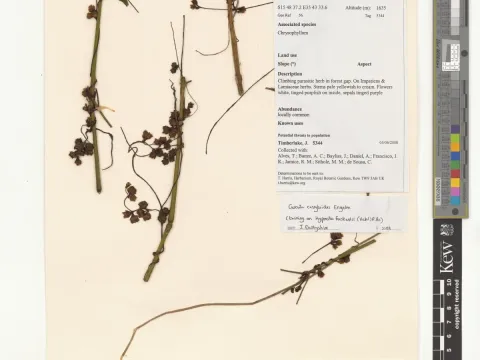
Cuscuta cassytoides
Cuscuta cassytoides
Cuscuta cassytoides is a highly specialized parasitic plant belonging to the Convolvulaceae family. It lacks roots and chlorophyll, functioning entirely as an obligate parasite that depends on host plants for its survival and reproduction.
What the section contains
Cuscuta cassytoides
The geographic range is predominantly temperate and subtropical regions. This species thrives in environments where host plants are abundant, allowing the parasite to spread its twining stems and form dense, tangled mats over the canopy.
Botanical characteristics include thread-like stems that coil around the host, penetrating the tissues with specialized organs called haustoria. These structures bypass the host's vascular system to extract water, nutrients, and photosynthates.
Environmental requirements for the parasite are mostly tied to the vigor of the host. High humidity and warmth facilitate faster germination of its seeds, which can remain dormant in the soil for a decade before finding a suitable host.
Agronomic control is strictly preventive. It involves sourcing certified seed lots free from contamination and implementing strict quarantine protocols at borders to prevent the accidental introduction of this weed into new areas.
The primary threat is significant crop loss. Infestation weakens host plants to the point where growth is stunted and yield is severely diminished, often leading to total loss in specific sectors of a field.
Beyond nutritional theft, Cuscuta cassytoides serves as a biological vector. It spreads various viral pathogens, including phytoplasmas, between plants, creating complex disease scenarios that are difficult to manage.
Management strategies require integrated pest management (IPM) practices. This includes deep plowing, crop rotation with non-host species, and the timely removal of infested plant material before the parasite sets seeds.
Chemical control focuses on pre-emergence herbicides that inhibit the germination of dodder seeds. Post-emergence control is limited and requires extreme caution to avoid damaging the primary agricultural crop.
Field monitoring is critical. Scouting for early signs of thread-like stems allows for manual spot removal, which is the most effective method for containing minor infestations before they scale up.