
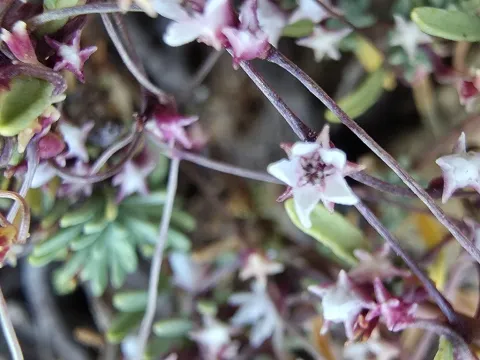
Cuscuta babylonica
Cuscuta babylonica
Cuscuta babylonica is an obligate parasitic plant belonging to the Convolvulaceae family. It is not an agricultural crop but a detrimental weed. Due to its status as a quarantine pest, any intentional cultivation of this species is strictly prohibited by international agricultural standards.
What the section contains
Cuscuta babylonica
The life cycle commences with seed germination in the soil, provided that moisture and temperature levels are optimal. The seeds are remarkably resilient and can persist in the soil seed bank for several years until conditions allow for successful activation.
After emergence, the seedling exhibits circumnutation to locate a suitable host plant. If a host is not reached within approximately two weeks, the seedling exhausts its limited nutrient reserves and perishes due to the absence of chlorophyll for photosynthesis.
Germination typically peaks during spring and summer when soil temperatures are sufficiently warm. Temperatures ranging from +18 to +25 degrees Celsius are generally considered ideal for the initiation of the parasitic growth phase.
Dissemination of seeds occurs primarily through human activity, including contaminated agricultural seed stocks, agricultural machinery movement, and transport via irrigation water or livestock migration.
This species requires specific environmental conditions that coincide with the presence of susceptible host plants. Its natural distribution is primarily centered in the arid and semi-arid regions of the Middle East and Central Asia.
High humidity in the immediate environment is essential during the initial germination phase. Once the parasite establishes connection with the host through haustoria, it becomes independent of soil moisture and relies entirely on the host's vascular system.
The soil substrate must be sufficiently aerated and warm to support the initial development of the parasite. While it is highly adaptable, extreme soil salinity or compaction can significantly inhibit the success of the seedling's attachment.
Cuscuta babylonica thrives in high-temperature environments, making it particularly aggressive during long, hot summers. Unfavorable temperature fluctuations can curtail the reproductive phase and limit seed production.
Agricultural management requires stringent quarantine oversight, focusing on the prevention of seed entry. Seed cleaning technology is the primary defense against the unintentional spread of this weed in agricultural regions.
The threat posed by Cuscuta babylonica is severe, as it acts as a vector for various plant viruses while physically depleting the host of water, minerals, and photosynthetic products. This leads to stunted growth and reduced yields.
While specific fungal pathogens can sometimes inhibit the growth of dodder in highly humid conditions, there are currently few biological control agents that provide reliable suppression in commercial farming environments.
Mechanical removal remains the most effective strategy for small-scale infestations. Infested material must be destroyed by burning to prevent the secondary dispersal of seeds to uninfected areas of the field.
Field infestations often necessitate drastic measures, such as deep plowing to bury the seed bank beyond the reach of germination depths. Additionally, the use of systemic herbicides is limited by the risk of damaging the host crop.
Preventative strategies emphasize the management of irrigation networks to prevent seed transport and the implementation of diverse crop rotations that include non-host species to break the life cycle of the parasite.