
Cuscuta glomerata
Cuscuta glomerata
Cuscuta glomerata, commonly known as rope dodder, is an annual parasitic plant belonging to the Convolvulaceae family. It lacks chlorophyll and functional roots, relying entirely on a host plant for its survival through specialized structures called haustoria.
What the section contains
Cuscuta glomerata
The native range of this species is North America, where it thrives in moist prairies, wetlands, and along riparian zones. Unlike some dodder species that prefer dry landscapes, C. glomerata is highly specialized for moisture-abundant habitats.
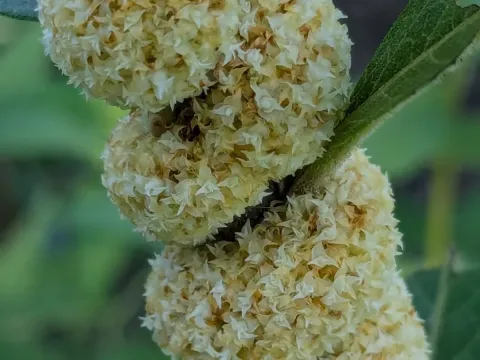
Botanically, it is identified by its dense, ball-like inflorescences that wrap tightly around the host's stems. The stems are generally yellow to orange, thread-like, and branch profusely, creating a massive tangle that smothers the host's foliage.
Environmental requirements for growth depend on sufficient moisture and the presence of suitable host vegetation. The seeds require specific temperatures and moisture levels to germinate, and the seedling must find a host within a few days or it will perish.
Agronomic management is difficult because of the plant's aggressive growth and effective seed dispersal. Preventive measures, such as the use of certified seed and field monitoring, are essential to stop the spread of this parasitic organism in agricultural systems.
Rope dodder is considered a serious quarantine weed in many agricultural regions. It negatively affects perennial forage crops and various native shrubs by extracting water, minerals, and photosynthates, leading to significant yield loss.
The plant acts as a major vector for viral pathogens. As it draws nutrients from multiple plants, it can transmit systemic viral infections between neighboring plants, drastically reducing the overall health of the crop field.
Managing C. glomerata is challenging because of the seed longevity in the soil, which can last for several years. Furthermore, small stem fragments can reattach to hosts, making simple mechanical removal ineffective if not done carefully.
Chemical control usually involves the application of non-selective herbicides to the infected area. This typically results in the destruction of the host plants as well, which is often necessary to stop the lifecycle of the dodder.
Strict quarantine protocols are the most effective way to deal with rope dodder. Preventing the movement of hay, seeds, or contaminated soil from infested areas into clean agricultural zones is the primary strategy for long-term control.