
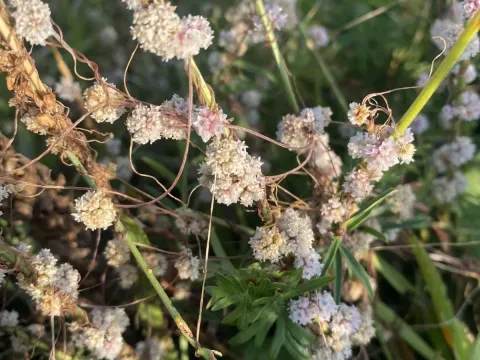
Cuscuta approximata
Cuscuta approximata
Cuscuta approximata, commonly known as dodder, is not a crop but a destructive parasitic plant from the Convolvulaceae family. It is never cultivated; instead, it is introduced into fields through contaminated seeds, machinery, or animal fodder.
What the section contains
Cuscuta approximata
The seeds of this parasite possess extreme longevity, capable of remaining dormant in the soil for up to a decade, waiting for the presence of a suitable host plant to begin their life cycle.
Upon germination, the seedling exhibits a characteristic twining motion. Since it lacks roots and true leaves, it must find a host within a few days or it will perish due to the depletion of internal energy reserves.
Dodder seeds are remarkably small and can easily escape cleaning processes if high-quality seed selection is not strictly observed. This underscores the importance of buying certified crop seeds free from parasitic impurities.
Once a host is located, the dodder attaches itself using specialized structures called haustoria, which penetrate the host's stems to extract water and nutrients, effectively turning the crop into the parasite's life support system.
Dodder has almost no requirements regarding soil fertility, as it obtains all its water and mineral needs directly from the host plant rather than the substrate, allowing it to thrive on diverse types of farmland.
Warm, moist climatic conditions are highly conducive to its growth. High temperatures facilitate a faster metabolic rate, which enables the dodder to expand its network across the host plant more rapidly.
The parasite is particularly invasive in legume fields, such as alfalfa and clover, as well as in various vegetable crops that provide a continuous supply of moisture and structural support for the dodder's stems.
While sunlight is required during the initial germination phase, the parasite can proliferate even in dense, shaded crop canopies once it has successfully established its parasitic connection to the host.
Agricultural management requires strict adherence to quarantine protocols, including deep plowing to bury dormant seeds and the use of mechanical cleaning for all agricultural tools moved between fields to prevent cross-contamination.
The primary threat posed by Cuscuta approximata is severe physiological stress to crops, which leads to stunted growth, reduced photosynthetic efficiency, and, in cases of heavy infestation, total crop failure.
Beyond nutrient theft, dodder acts as a biological vector for various viruses and pathogens. The parasite’s haustoria serve as a direct bridge, facilitating the transmission of diseases between host plants within the field.
Infested areas are often quarantined, resulting in significant economic losses for farmers. Forage crops contaminated with dodder become unpalatable and potentially toxic to livestock, rendering them unusable.
Natural predators are rarely effective enough to control dodder populations, leaving mechanical removal as the most reliable method for small-scale infestations, despite being labor-intensive.
Chemical control is notoriously difficult because the parasite is physically intertwined with the host crop, meaning that most broad-spectrum herbicides would cause equal damage to the crop being protected.