
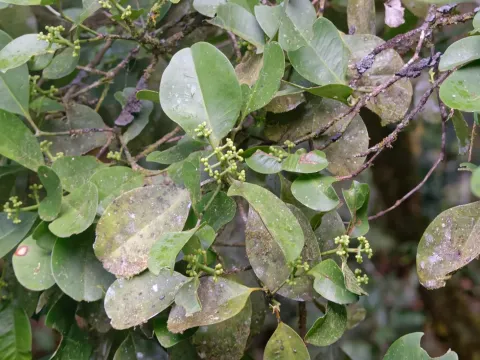
Garcinia warrenii
Garcinia warrenii
Garcinia warrenii is a notable member of the Clusiaceae family, indigenous to the tropical rainforests of Australia. This evergreen tree is valued for its unique botanical features and its role within the dense tropical understory where it naturally thrives.
What the section contains
Garcinia warrenii
The climatic requirements are strictly tropical, necessitating high humidity and consistent warmth throughout the year. The species is highly sensitive to cold and frost, meaning that its cultivation is strictly limited to frost-free tropical environments where temperatures remain elevated.
Regarding soil conditions, Garcinia warrenii prefers fertile, well-draining substrates rich in organic matter. While the tree can tolerate various soil types, the most important factor is the prevention of waterlogging, which is essential to maintain root health and prevent decay.
Agronomic management includes maintaining adequate moisture levels and ensuring that the tree is situated in an area with either partial shade or filtered sunlight. While young plants are sensitive to intense direct exposure, mature trees may adapt to higher light levels, provided irrigation is sufficient.
The хозяйственное usage of this crop centers on its edible fruits, which offer a unique profile for tropical fruit production. Due to its slow growth, it is increasingly becoming a subject of interest in niche agroforestry systems and sustainable tropical landscape development.
The primary threats to the health of Garcinia warrenii involve fungal pathogens, particularly leaf spot diseases, which flourish in high-humidity environments with poor ventilation. These infections can lead to significant defoliation if left unmanaged during prolonged wet seasons.
Insect pests such as scale insects and mealybugs present a continuous risk. These pests typically congregate on the undersides of leaves and along young stems, extracting sap and weakening the tree, which can significantly reduce fruit set and overall vigor.
Root rot caused by stagnant water or compacted soil is a major physiological threat. Once the root system is compromised by fungal colonization due to anaerobic soil conditions, the plant's ability to absorb water and nutrients is severely diminished.
Nutrient deficiency, specifically related to micronutrients, often manifests as leaf chlorosis. This condition is prevalent in soils that have been heavily leached by rainfall, requiring periodic fertilization with chelated minerals to maintain optimal photosynthesis.
Integrated Pest Management (IPM) is recommended to control these threats effectively. This includes monitoring for early signs of infestation, removing diseased plant tissue, and maintaining proper spacing between trees to ensure adequate airflow within the canopy.