
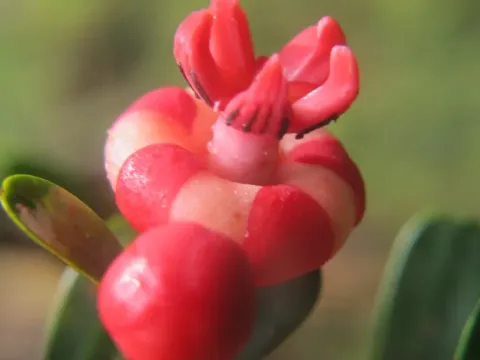
Symphonia
Symphonia
Symphonia is a genus of evergreen trees and shrubs belonging to the Clusiaceae family. These plants are native to the tropical forests of Africa, Madagascar, and parts of South America.
What the section contains

Symphonia
The plant thrives in tropical climates where temperatures remain consistently between 22 and 30 degrees Celsius. It is highly sensitive to cold and requires protection from frost and sudden temperature drops.
High humidity is essential for the growth of Symphonia. In cultivation, it is important to ensure that the environment mimics the natural moisture levels of the tropical rainforest.
Soil requirements include well-draining, nutrient-rich substrates. The soil should be slightly acidic to neutral to ensure optimal nutrient uptake by the root system.
Light management is crucial, as the plant prefers filtered sunlight or partial shade. Exposure to intense, direct midday sun can result in leaf scorching and reduced plant vitality.
Symphonia is primarily valued for its durable wood, which is utilized in various construction and furniture-making applications due to its resilience against decay.
The plant also produces resin, which has historically been used for its chemical properties in traditional practices, including sealing and potential pharmacological applications.
Fruit production is observed in several species, serving as a food source in regional contexts, though commercial-scale fruit production is not the primary agricultural focus.
Economic yields are dependent on the management of soil health and the application of fertilizers that support steady vegetative development.
Future agricultural potential includes the sustainable harvest of non-timber forest products, making Symphonia a significant candidate for agroforestry systems.
The most common threats to Symphonia plantations are fungal diseases, which often proliferate in environments with high humidity and stagnant air.
Pest pressures primarily come from sap-sucking insects like mealybugs and scale insects. These pests can significantly stunt the growth of young trees.
Disease management strategies rely on cultural practices such as spacing plants to improve airflow and removing infected plant tissue promptly.
Integrated pest management, combining biological controls and targeted interventions, is recommended to keep pest populations at manageable levels.
Regular monitoring of plant foliage is the most effective approach to detecting early signs of disease or infestation before they impact the harvest yield.