
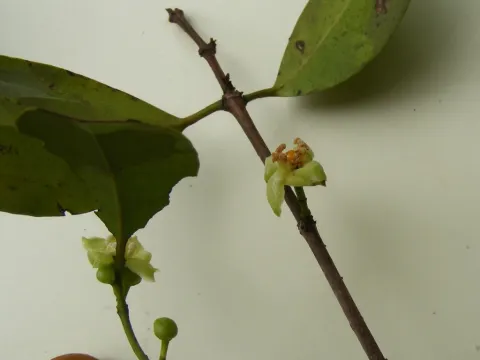
Garcinia punctata
Garcinia punctata
Garcinia punctata is a tropical evergreen tree species belonging to the Clusiaceae family. Native to the equatorial regions of Western and Central Africa, it thrives in dense forest environments where high humidity and warm temperatures prevail throughout the calendar year.
What the section contains
Garcinia punctata
The plant requires a stable tropical climate to reach its full productive potential. It is highly sensitive to extreme temperature fluctuations and requires an environment that mimics the understory of a tropical rainforest, often benefiting from light shading during its early developmental phases.
Regarding soil requirements, Garcinia punctata demands deep, fertile, and well-drained soil. Waterlogging is a significant threat to its root system, which can lead to fungal pathogens and root decay. Therefore, selecting sites with natural slopes or incorporating artificial drainage systems is essential.
Botanically, the species is defined by its thick, opposite leaves characterized by distinctive glandular dots, which serve as a diagnostic feature. The canopy is usually dense, providing a self-shading mechanism that protects the tree's own interior structures and helps regulate local transpiration rates.
Agronomic management involves careful monitoring of the canopy structure and soil nutrient levels. The plant responds well to organic fertilization, which helps maintain the nutrient balance required for consistent leaf production and fruit development in plantation settings.
The agricultural and economic utility of Garcinia punctata is primarily concentrated on its fruit production and wood quality. The fruits are consumed locally, prized for their unique texture and flavor profiles, which align with the diverse culinary traditions of its native African regions.
Harvesting fruits requires precision and timing. Because the fruits are perishable, they must be gathered at the point of optimal physiological maturity to ensure market viability. Harvesting is generally a labor-intensive process due to the tree's height and the need for careful handling.
The wood of Garcinia punctata is highly regarded for its physical robustness and resistance to environmental stress. It is frequently utilized in the construction industry and for the creation of artisan goods, providing a long-term economic return for growers who manage these trees for timber.
Beyond fruit and timber, the seeds possess potential for oil extraction. These oils may have applications in the cosmetic or food processing sectors, suggesting that Garcinia punctata holds untapped potential for diversified agricultural value chains in tropical areas.
Ongoing maintenance is crucial for yield sustainability. Pruning techniques designed to promote air circulation within the crown help mitigate the risks associated with tropical humidity and moisture-related pests, ensuring the tree remains healthy and productive for many harvest cycles.