
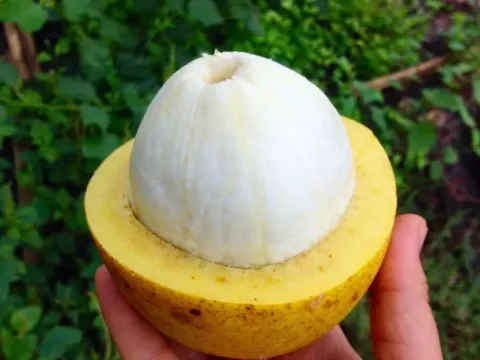
Platonia
Platonia
Platonia (scientific name: Platonia insignis) is a prominent fruit-bearing tree belonging to the Clusiaceae family. It is a large, evergreen species native to the humid tropical forests of South America, particularly in Brazil.
What the section contains

Platonia
The tree thrives in environments characterized by high humidity and consistent tropical temperatures. It requires significant solar exposure for optimal growth and fruit development throughout its lifecycle.
For successful cultivation, well-drained, deep, and acidic soils are essential. The tree is sensitive to waterlogged conditions, which necessitates careful site selection and the installation of effective drainage systems.
Botanically, the tree is recognized for its thick, resinous bark and pyramidal structure. It can grow up to 40 meters tall in the wild, though managed cultivars are typically kept smaller for easier harvesting.
The fruit, commonly known as Bacuri, is highly valued for its nutritional profile, containing significant amounts of phosphorus, iron, and vitamin C, making it a key crop for local agribusinesses.
Platonia trees can be susceptible to various tropical insect pests, which primarily feed on the foliage and can significantly stunt the growth of young specimens during their nursery stage.
Fungal infections are a primary concern in high-humidity cultivation areas, particularly when trees are planted too closely, limiting airflow and promoting moisture retention in the canopy.
Root system issues, including rot, are common when the soil structure is unsuitable or when irrigation protocols are not aligned with the natural drainage capacity of the land.
Management of these threats often involves regular pruning to improve air circulation and the implementation of organic pest control methods to maintain orchard health.
Fruit infestation by specific fruit flies can compromise harvest yields, requiring vigilant monitoring and the use of protective netting or timely harvesting to mitigate crop loss.