
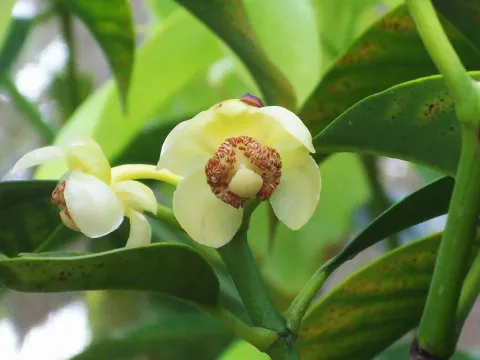
Garcinia macrophylla
Garcinia macrophylla
Garcinia macrophylla is a tropical evergreen tree belonging to the Clusiaceae family. It is native to the rainforest ecosystems, characterized by high humidity, constant warmth, and consistent rainfall throughout the year.
What the section contains
Garcinia macrophylla
This crop requires deep, fertile, and well-draining soils to thrive. While it prefers moist conditions, it is strictly intolerant to waterlogging, which often leads to root rot and other systemic fungal infections.
Regarding light, the species performs best in semi-shaded environments during its juvenile stages. Adult trees are more tolerant to light exposure, but protecting the foliage from intense heat is crucial for maintaining photosynthetic efficiency.
The optimal temperature range for this species is between 22°C and 28°C. It is extremely sensitive to cold temperatures and cannot survive in frost-prone regions, restricting its cultivation to strictly tropical latitudes.
Soil management involves maintaining a slightly acidic pH and ensuring constant moisture availability through irrigation if the local rainfall pattern includes a dry season. Organic mulching is highly recommended to protect the root system from thermal fluctuations.
The primary economic value of Garcinia macrophylla lies in its edible fruits, which are traditionally consumed for their unique flavor profile. The fruits are rich in various phytonutrients and are valued locally as a nutritious food source.
Yield capacity is largely dependent on tree maturity and cultural practices. Regular pruning is necessary to maintain a structure that facilitates light penetration and eases the harvest process for agricultural workers.
The timber produced by this tree is notably durable, providing secondary utility for local woodworking and tool-making industries. This adds a sustainable aspect to the orchard's life cycle when trees need to be replaced.
The aesthetic appeal of the broad, glossy leaves makes this species an attractive component in permaculture systems and agroforestry, where it contributes to canopy density and ecosystem stability.
Ongoing research into the chemical composition of the fruit suggests potential for its use in the functional food industry, as many Garcinia species are known for their high concentration of bioactive compounds.
Fungal root diseases are the most significant threat to Garcinia macrophylla, usually exacerbated by poor soil aeration or excess irrigation. Implementing robust drainage and soil health programs is essential for prevention.
Pest management primarily involves monitoring for scale insects and mealybugs, which are common in tropical orchard environments. These pests weaken the plant by extracting sap and can facilitate the spread of secondary viral infections.
Defoliating larvae can cause localized damage to the young foliage. Integrated pest management (IPM) strategies, including the introduction of natural predators, are preferred over broad-spectrum chemical interventions.
Wind damage is a constant concern due to the large surface area of the leaves. Planting windbreaks or ensuring the orchard is protected by natural terrain is a standard procedure in tropical orchard site selection.
Post-harvest losses can occur if fruits are stored in improper humidity levels. Post-harvest cooling and rapid transportation to markets are critical to maintaining the shelf life and quality of the berries.