
Garcinia morella
Garcinia morella
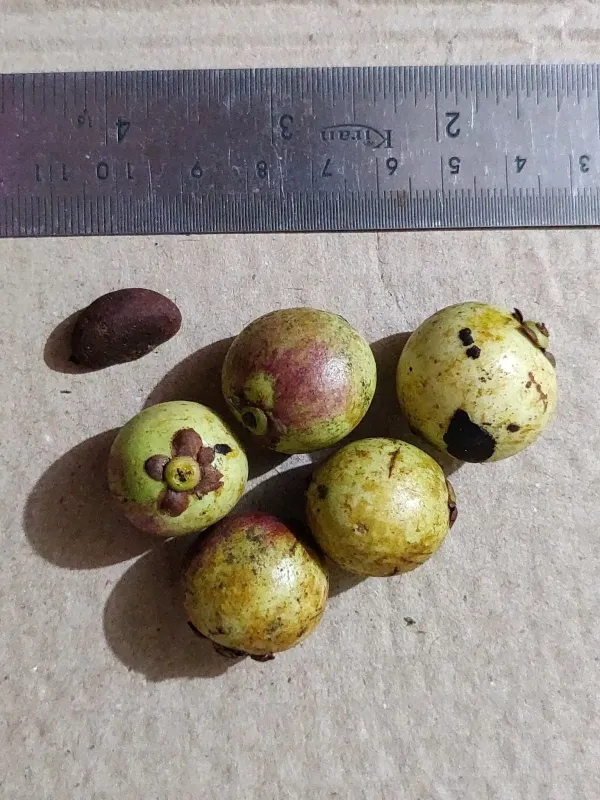
Description
Sowing dates
Garcinia morella is an evergreen tropical tree belonging to the Clusiaceae family. The primary method of propagation is through seeds, which should be sown immediately after harvesting because they lose viability very quickly when dried.
The best sowing results are achieved during the rainy season when humidity levels are high. Seeds are placed in well-draining, nutrient-rich potting media to ensure uniform germination and to prevent fungal diseases that often affect young seedlings.
Growth is notably slow, requiring growers to exercise patience. For the first few years, seedlings must be kept in partial shade to mimic the conditions of the natural understory where this species thrives in its native environment.
Transplanting is a delicate operation that requires careful handling of the root system. Once the plant has developed a sturdy stem, it can be transferred to its final location, provided the soil has been appropriately prepared and the climate is stable.
Young trees benefit from regular monitoring and weeding. Since the species is sensitive to root disturbance, weed control should be done manually rather than through deep mechanical cultivation near the base of the plant.
Growing requirements
This species is strictly a tropical crop, requiring high temperatures year-round. It is highly sensitive to frost and sudden temperature drops, which can severely damage the foliage and inhibit the production of resin.
High relative humidity, typically around 80% to 90%, is necessary for the tree to produce high-quality gamboge resin. In drier regions, irrigation and misting systems are essential to maintain the microclimate necessary for the tree's metabolism.
The soil should be deep, fertile, and slightly acidic to neutral in pH. Excellent drainage is non-negotiable, as the roots are highly susceptible to rot if water remains stagnant for even short periods.
Organic fertilization, such as well-rotted manure or compost, helps support steady growth. Excessive synthetic nitrogen should be avoided, as it may force leafy growth at the expense of the resin-producing capacity of the cambium layer.
Wind protection is crucial for protecting the branches, which can be somewhat brittle in young trees. Windbreaks not only reduce physical damage but also help maintain a more consistent level of humidity around the leaves.
Yield
The primary economic product of Garcinia morella is gamboge, a bright yellow gum-resin obtained from the tree's bark. It is harvested by carefully scoring the bark and collecting the yellow latex that slowly exudes and hardens.
Harvesting is a skilled process that must be performed to avoid permanent damage to the vascular system of the tree. When done correctly, the tree remains productive for many years, providing a consistent source of income for farmers.
The fruit of the tree is also edible and is locally utilized in traditional culinary and medicinal practices. While secondary to the resin, the fruit provides an additional benefit to the cultivation cycle.
Yield efficiency is directly related to the health of the tree. Optimal production is usually observed in trees that are mature and have a well-developed canopy, allowing for regular and careful tapping cycles.
After collection, the raw resin must be processed by cleaning it of impurities. Proper drying in a cool, shaded environment is vital to preserve the vibrant color and chemical integrity of the gamboge for commercial trade.
Main diseases and pests
Root rot caused by stagnant water and poor drainage is the most significant threat to the tree. If detected too late, it can lead to the rapid decline and death of the entire plant.
Scale insects and mealybugs are common pests that feed on the sap of young shoots and leaves. Regular inspection and the use of insecticidal soaps or horticultural oils can help manage these infestations effectively.
Fungal leaf spot diseases can occur, particularly in areas with poor airflow and high humidity. Ensuring proper spacing between trees during planting can significantly mitigate these risks by improving natural ventilation.
Mechanical injuries from harvesting tools can create entry points for pathogens. Always sanitize tools before tapping the trees and apply protective wound dressings to the incisions to promote faster healing.
- Phytophthora root rot.
- Scale insects (Coccidae).
- Mealybug infestations on young growth.
- Fungal leaf spots during excessive rainfall.