
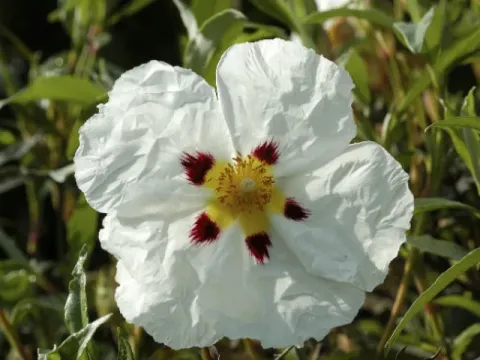
Cistus ledon
Cistus ledon
The propagation of Cistus ledon is typically initiated in early spring. Seeds are sown in a light, well-draining substrate, ensuring they are only lightly covered, as they require sufficient light to trigger the germination process successfully.
What the section contains
Cistus ledon
In professional nursery settings, seed trays are placed in warm environments with temperatures around 18–20 degrees Celsius. Seedlings are then transplanted into individual pots once they develop their first set of true leaves, allowing for easier establishment.
Vegetative propagation is widely used for scaling production. Semi-hardwood cuttings, taken during the late summer, provide a reliable method for cloning desirable phenotypes that demonstrate higher resin output.
Cuttings are placed in a mist propagation unit or under plastic covers to maintain high humidity levels until root formation is complete. This usually takes several weeks under consistent temperature conditions.
Establishing the field planting should be done after the risk of frost has passed. Early spring transplanting allows the young plants to develop strong root systems before the onset of the summer heat.
Cistus ledon belongs to the Cistaceae family and is native to Mediterranean landscapes. Its primary requirement is a sunny, open location with excellent air circulation to maintain plant health and boost resin production.
The plant thrives in nutrient-poor, rocky, or sandy soils. It is highly intolerant of waterlogged conditions, which frequently result in root rot. Therefore, selecting sloped or naturally well-draining terrain is crucial for long-term survival.
Regarding climate, the plant prefers temperate conditions with mild winters. While it is quite drought-tolerant once established, it requires protection or indoor overwintering in regions with harsh freezing temperatures.
The pH of the soil should ideally be neutral or slightly acidic. Cistus species generally dislike heavy clay soils that retain excess moisture during the dormant winter months.
Maintenance involves minimal intervention. Pruning after the flowering season is the most important cultural practice to maintain the plant's shape and encourage the growth of young, productive branches for the next season.
The primary economic focus of Cistus ledon cultivation is the extraction of labdanum, a resinous substance, and its corresponding essential oil. Yield is determined by both the density of the planting and the age of the crop.
Productivity increases significantly from the third year onwards as the plants build up their biomass. Intense solar exposure is directly correlated with higher resin yields in the glandular trichomes on the leaves.
Yield management requires careful monitoring of the plant cycle. Older plants that become too woody may show a decline in resin output, necessitating systematic renewal of the plantation blocks to keep overall yield metrics stable.
Mechanization of the harvest process is possible when rows are spaced appropriately. This reduces labor costs while maintaining high quality by ensuring that only fresh, high-resin biomass is collected.
Environmental stressors like controlled drought can sometimes stimulate secondary metabolism, potentially increasing the concentration of certain aromatic compounds within the plant tissues.
The most significant threat to a Cistus plantation is the development of root-based fungal pathogens, specifically Phytophthora and Verticillium species. These pathogens thrive in stagnant soil water, making drainage the primary line of defense.
While the strong fragrance and sticky resin act as a deterrent to most insect pests, aphids can occasionally pose a problem during the spring growth phase, affecting new terminal buds and foliage.
Preventive care involves strict sanitation practices. Infected plants must be identified early and removed to prevent the spread of fungal spores throughout the entire plantation field.
Avoiding chemical intervention is preferred in essential oil crops to maintain product purity. Instead, growers rely on cultural practices like row spacing and weed control to promote a hostile environment for potential diseases.
Monitoring the moisture levels in the root zone is a critical preventive measure. If the soil remains moist for too long, corrective actions such as deep-tilling or adding organic amendments are necessary.
Harvesting usually occurs during the peak flowering stage when the concentration of resins and essential oils in the foliage is at its maximum. This timing is essential for both quantity and quality of the final extract.
Mechanical harvesting is common in large operations, using cutting machinery to trim the upper canopy of the shrubs. This process is efficient and helps keep the plants in a vegetative state, preventing them from becoming too spindly.
Post-harvest management involves transporting the collected green matter immediately to the processing site. Prolonged storage in large piles can lead to heating and fermentation, which drastically degrade the quality of the essential oils.
If processing cannot be immediate, the biomass should be spread out in a well-ventilated, shaded area to allow for natural drying without direct exposure to sunlight, which could volatilize the top-note aromatic compounds.
The final product is usually processed via hydro-distillation or solvent extraction. Storing the dried material in cool, dark, and dry conditions preserves its aromatic integrity until distillation takes place.