
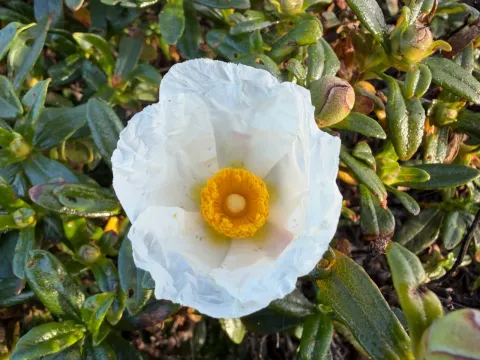
Cistus palhinhae
Cistus palhinhae
Cistus palhinhae is a compact evergreen shrub belonging to the Cistaceae family. It is a rare species endemic to the coastal regions of Portugal, adapted to rugged, windswept environments.
What the section contains
Cistus palhinhae
The plant thrives in full sun and requires exceptionally well-draining soil. It is highly intolerant of waterlogged conditions, which can lead to rapid root rot during dormant seasons.
Soil type should ideally be sandy or rocky with a neutral to slightly acidic pH. As a hardy Mediterranean species, it does not require fertile soil and often suffers from excessive fertilization.
Climate adaptability is limited to mild maritime environments. While it tolerates occasional drought, prolonged extreme frost can be detrimental to the integrity of the foliage and stems.
Cultural management should focus on minimal intervention. Regular pruning is not always necessary, but removing deadwood and thinning the center of the shrub helps maintain vigor and airflow.
Root rot caused by Phytophthora species is the most significant threat to the survival of Cistus palhinhae, particularly in regions with high rainfall and poor drainage.
Powdery mildew can affect the foliage in enclosed or humid environments where air circulation is restricted, leading to reduced photosynthesis and aesthetic damage.
Insect pests such as aphids may occasionally congregate on the tender shoots during the spring growth phase, though they rarely cause structural failure.
Due to the plant's resinous leaves, it is naturally resistant to many common herbivores and insects, making it a low-maintenance choice for dry gardens.
Regular sanitation measures, including the removal of fallen debris from around the base of the plant, are effective strategies to prevent the buildup of fungal spores.