
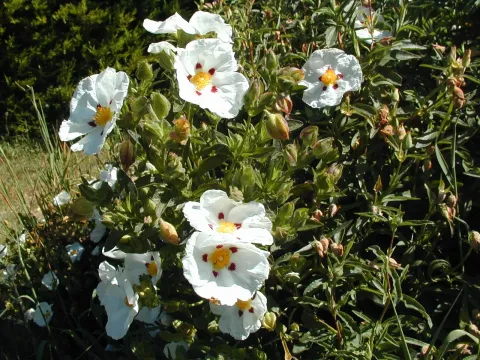
Cistus lusitanicus
Cistus lusitanicus
Cistus lusitanicus is a notable member of the Cistaceae family, commonly known as rockrose. It originates from the Mediterranean basin, where it thrives in warm, dry climates characterized by intense solar radiation.
What the section contains
Cistus lusitanicus
For optimal growth, this crop requires well-drained, nutrient-poor soils. It is highly drought-tolerant, making it an excellent candidate for xeriscaping or sustainable agriculture in arid environments.
The plant features aromatic foliage covered in resin, which is a key component in the production of high-quality essential oils. These oils are widely used in fragrance chemistry as a base note and fixative.
Cultivation practices involve minimal fertilization and irrigation. Over-fertilization can reduce the plant's natural resin production, so it is recommended to maintain a lean cultivation regime.
In landscape architecture, the plant is valued for its hardiness, evergreen leaves, and beautiful flowers, providing an aesthetic appeal alongside its industrial utility.
The primary concern for Cistus lusitanicus health is the development of root pathogens caused by waterlogged soil conditions. Proper site selection and drainage are critical for long-term survival.
Aphids and spider mites are common pests that may infest the plant, particularly in greenhouses or under conditions of poor air circulation. Regular inspection is advised to manage populations.
Fungal infections, such as powdery mildew or rust, may appear during humid weather. To prevent this, spacing must ensure adequate airflow between individual specimens.
Sanitation is an essential part of disease management, involving the regular removal of dead or decaying plant material to prevent the spread of fungal spores.
When chemical interventions are required, it is essential to use products that are safe for aromatic plants to avoid damaging the quality of the resin and final extracts.