
Cistus cyprius
Cistus cyprius
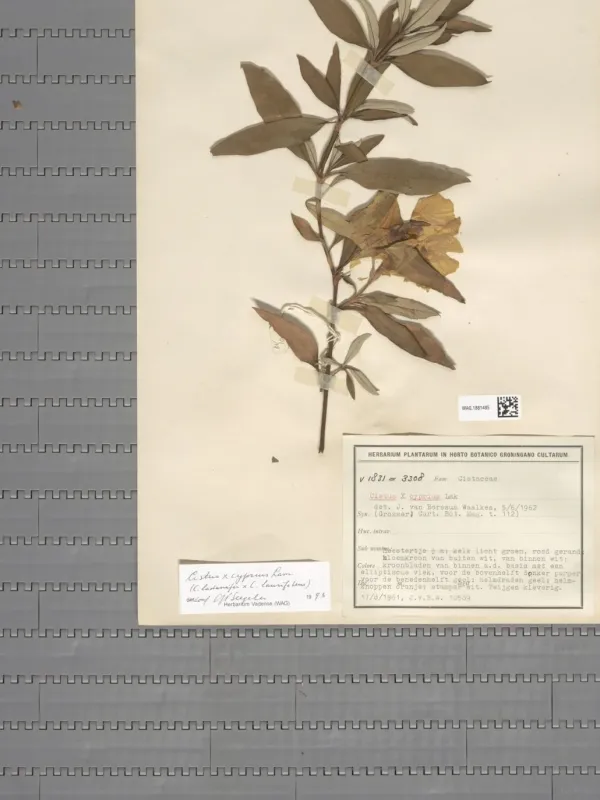
Description
Growing requirements
Cistus cyprius, commonly known as the Cyprus rockrose, is a perennial evergreen shrub belonging to the Cistaceae botanical family.
The plant is native to the Mediterranean basin and thrives in poor, rocky, and alkaline soils that provide excellent drainage, avoiding any waterlogging.
As a sun-loving species, it requires high levels of solar exposure to produce its characteristic sticky, resinous secretion, which is vital for its commercial value.
The species is highly drought-tolerant, adapted to hot and dry summer climates, making it an excellent candidate for low-input agricultural systems.
In terms of temperature, it can withstand moderate frost once established, but it is sensitive to prolonged cold and humidity in its juvenile stage.
Yield
The primary economic value of Cistus cyprius lies in the production of labdanum, a sticky resin extracted from its leaves and young terminal branches.
This resin is widely prized in the perfume industry as a high-quality fixative and a key ingredient for producing complex, amber-like fragrance notes.
The cultivation for resin yields requires specific harvest timing, typically performed during the dry season when resin concentration on the foliage is highest.
Aside from chemical extraction, the species is increasingly utilized in xeriscaping and ornamental horticulture for its drought-resistant aesthetic qualities.
Sustainable harvest methods, including careful pruning of shoots rather than whole-plant destruction, ensure the long-term viability of the plantation.
Main diseases and pests
Cistus cyprius is naturally resistant to many pests due to the chemical complexity of its essential oils, which act as a natural deterrent.
The most common issues for this crop are related to soil-borne pathogens, specifically root rot, which occurs under anaerobic conditions or poor drainage.
Powdery mildew may occur in poorly ventilated areas with excessive moisture, necessitating thinning out branches to promote air circulation.
Aphids or mites are rarely a significant concern, although routine inspection is recommended in intensive farming systems to maintain plant vigor.
Disease management is best achieved through preventative measures, such as providing proper spacing and ensuring the soil is light and well-aerated.