
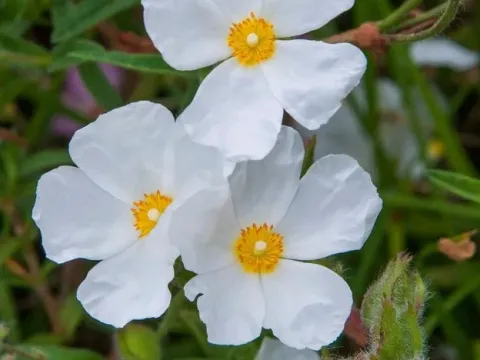
Cistus ingwersenii
Cistus ingwersenii
Cistus ingwersenii is an attractive evergreen hybrid shrub belonging to the Cistaceae family. Known for its charming white flowers with golden centers, it is a popular choice for xeriscaping and Mediterranean-style garden designs in temperate climates.
What the section contains
Cistus ingwersenii
The plant thrives in full sun exposure. It is essential to choose a location where the shrub can receive at least six hours of direct sunlight daily to ensure dense growth and prolific flowering during the spring and early summer seasons.
Soil requirements for this species are specific: it demands exceptionally well-draining soil. Whether sandy, rocky, or chalky, the substrate must allow water to pass through quickly. It is highly intolerant of waterlogged conditions, which lead to rapid root decay.
This shrub is highly drought-tolerant once established. It requires minimal supplemental watering, making it an excellent candidate for low-maintenance landscapes. Excessive irrigation, especially during cool or humid weather, can be detrimental to the plant's overall health.
Maintenance involves light pruning immediately after flowering to keep the shrub compact. This practice prevents the plant from becoming woody and leggy, ensuring a more vigorous and aesthetic appearance in subsequent growing seasons.
Root rot is the most significant threat to Cistus ingwersenii, typically caused by poor soil drainage or overwatering. Maintaining a dry crown and ensuring that water never stands around the base is critical for preventing this issue.
Pests such as aphids and spider mites may occasionally infest the foliage, particularly during hot, dry spells. Monitoring the undersides of leaves and using insecticidal soaps can help manage these populations before they cause significant damage.
Powdery mildew is a fungal risk when there is inadequate air circulation around the shrub. Planting in an open area with good wind flow helps mitigate the risk of infection and maintains a healthy foliage environment.
The plant should not be over-fertilized, as excess nitrogen promotes soft, succulent growth that is more susceptible to fungal pathogens and pests. A layer of inorganic mulch, such as gravel, is recommended to keep the foliage off the damp soil.
In cases of severe infestation or disease, prompt removal of affected branches is necessary. Proper plant spacing during the initial sowing or planting stage is the most effective cultural practice to reduce overall disease pressure.