
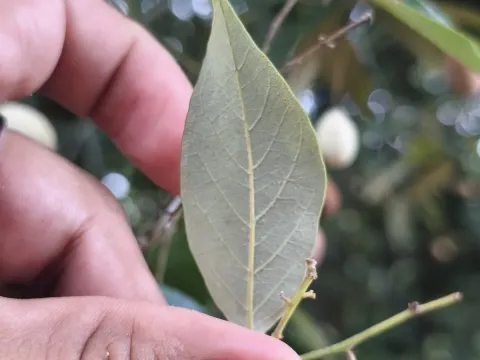
Licania hypoleuca
Licania hypoleuca
Licania hypoleuca is a prominent evergreen tree species belonging to the Chrysobalanaceae family. Originating from the humid tropical regions of the Americas, it is well-adapted to dense forest environments where high humidity and temperature stability are constant factors.
What the section contains
Licania hypoleuca
The tree thrives in well-drained, nutrient-rich soils. It requires consistent moisture levels throughout the year to maintain its dense foliage. While it can tolerate various soil types, waterlogged conditions should be strictly avoided to prevent root damage, which is a major physiological stressor for this species.
Botanically, Licania hypoleuca is distinguished by its leathery leaves, which feature a characteristic silvery or light-colored indumentum on the underside. This adaptation assists the tree in managing gas exchange and limiting moisture loss during intense tropical heat.
The primary agricultural and forestry use of this species involves its high-quality timber. The wood is known for its density and remarkable resistance to environmental decay, making it suitable for specialized construction and tool manufacturing in local tropical economies.
Agrotechnical management includes periodic monitoring of soil pH and nutrient content. Because the species is native to complex forest ecosystems, providing organic mulching helps mimic the natural forest floor conditions, promoting better growth rates and long-term health.
The tree is susceptible to several fungal diseases, particularly those affecting the roots and the lower stem. In intensive cultivation, pathogens such as Phytophthora can cause significant damage if the drainage systems are not functioning optimally during the rainy season.
Insect pests are another common threat, with borers being the most dangerous for mature trees. These insects create galleries within the wood, which can introduce secondary infections and weaken the tree structure, eventually leading to stunted growth or tree mortality.
Leaf-feeding insects, such as beetles and caterpillars, can cause extensive defoliation if left unchecked. While older trees can survive moderate attacks, juvenile plants are highly vulnerable and require immediate pest management interventions to survive.
Prevention methods focus on maintaining tree vigor through appropriate site selection and thinning. Improving airflow within the canopy is crucial for reducing the micro-environmental humidity that promotes fungal spore germination.
Regular sanitation programs are essential for managing outbreaks. Removing and destroying infested or diseased plant parts prevents the spread of pathogens, ensuring the sustained productivity of the stand in agricultural or forestry applications.