
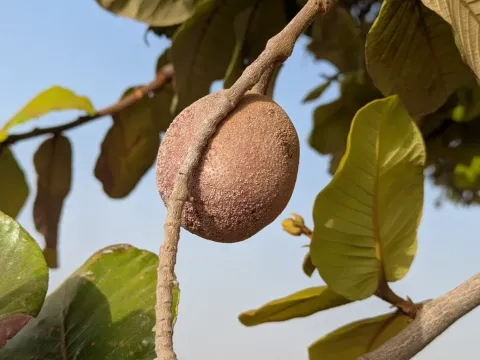
Neocarya
Neocarya
Neocarya (Neocarya macrophylla) is a tropical tree belonging to the Chrysobalanaceae family, native to the savanna and woodland regions of West and Central Africa.
What the section contains

Neocarya
The plant thrives in well-drained sandy or loamy soils. It demonstrates remarkable adaptability to drought conditions, making it a robust crop in arid tropical climates.
Full sun exposure is essential for the healthy development of Neocarya. The optimal temperature range for this species is between 22 and 30 degrees Celsius.
Care must be taken to avoid waterlogging, as the tree is susceptible to root rot if the soil remains excessively moist for extended periods of time.
Agricultural management includes keeping the area around the trunk clear of weeds and ensuring that the young tree is protected from strong, drying winds during its establishment phase.
The yield of Neocarya is determined by the age and vitality of the tree. Mature specimens can produce significant quantities of fruits, which are highly valued for their nutritional profile.
Harvesting is typically done over several months, as fruits ripen sequentially. This extended harvest period is an advantage for small-scale local agricultural systems.
To maximize yields, it is recommended to apply organic amendments to the soil to enhance nutrient availability and support strong fruit production.
The seeds of the fruit are particularly rich in oils, which have traditional and commercial value. Increasing fruit quality through selective practices is a focus for researchers.
Proper post-harvest handling, including careful sorting and storage, is crucial to maintain the quality of the fruits for processing or fresh consumption.
Neocarya trees can be affected by various pests, particularly fruit-boring insects that target the developing fruits and mature seeds, reducing market value.
Fungal pathogens represent another significant threat, especially during seasons with high humidity, which can lead to leaf spots and stem decay.
Preventative measures include regular pruning to improve air circulation within the canopy, which reduces the moisture trapped on leaves and branches.
Integrated pest management strategies are encouraged to protect the trees without relying heavily on chemical inputs, thus preserving local ecosystem health.
Regular monitoring of the plantation is essential for early detection of issues, allowing for quick action to mitigate the impact of disease or pest outbreaks.