
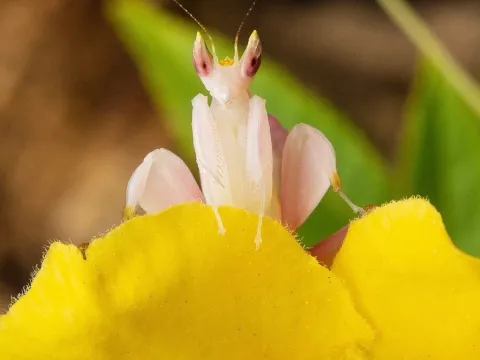
Orchid mantis
Hymenopus
The Orchid mantis (Hymenopus coronatus) is a remarkable species belonging to the family Hymenopodidae, famous for its appearance that mimics an orchid flower. While not an agricultural crop, it is a highly specialized insect that requires specific environmental conditions to thrive.
What the section contains

Orchid mantis
Originating from the tropical forests of Southeast Asia, these insects are adapted to high-humidity environments. Their natural habitat includes the dense canopy and flowering bushes of regions like Malaysia, Thailand, and Indonesia, where they hunt effectively.
For captive maintenance, it is vital to maintain a humidity level between 60% and 80%. This mimics the tropical rainforest atmosphere and is essential for the insect to successfully complete its molting phases throughout its growth cycle.
Temperatures should be kept consistently warm, ideally between 25°C and 30°C. Proper heating pads or lamps are often used to create a thermal gradient, allowing the mantis to thermoregulate according to its metabolic needs.
The dietary requirements for this species are specific: they are obligate carnivores that require live, active prey. Common food sources include house flies, fruit flies for nymphs, and larger crickets or flying insects for adult individuals.
Common health issues include fungal infections and respiratory distress, often caused by inadequate ventilation combined with excessive moisture in the enclosure. Maintaining a clean and aerated habitat is the most effective way to prevent these threats.
Another significant risk is injury during the molting process, often resulting from nutritional deficiencies or structural instability in the enclosure. Providing adequate vertical space for hanging is necessary to ensure the insect can shed its exoskeleton without interference.