
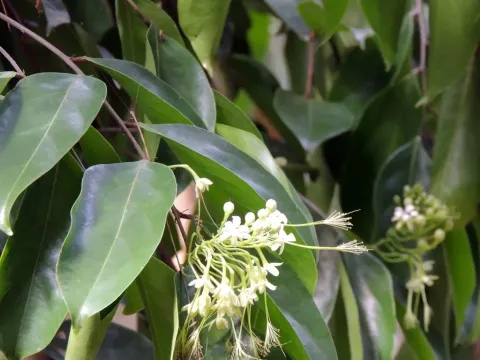
Dactyladenia
Dactyladenia
Dactyladenia is a genus of woody plants belonging to the Chrysobalanaceae family. The most prominent species, Dactyladenia barteri, is widely recognized for its significant role in tropical agroforestry systems.
What the section contains
 Dactyladenia barteri
Dactyladenia barteri
Dactyladenia barteri
 Dactyladenia campestris
Dactyladenia dichotoma
Dactyladenia dichotoma
Dactyladenia campestris
Dactyladenia campestris
Dactyladenia dichotoma
Dactyladenia dichotoma
 Dactyladenia dinklagei
Dactyladenia eketensis
Dactyladenia eketensis
Dactyladenia hirsuta
Dactyladenia hirsuta
Dactyladenia johnstonei
Dactyladenia johnstonei
Dactyladenia lehmbachii
Dactyladenia lehmbachi
Dactyladenia manni
Dactyladenia manni
Dactyladenia pallescens
Dactyladenia pallescens
Dactyladenia scabrifolia
Dactyladenia scabrifolia
Dactyladenia smeathmanni
Dactyladenia smeathmanni
Dactyladenia staudtii
Dactyladenia staudtii
Dactyladenia dinklagei
Dactyladenia dinklagei
Dactyladenia eketensis
Dactyladenia eketensis
Dactyladenia hirsuta
Dactyladenia hirsuta
Dactyladenia johnstonei
Dactyladenia johnstonei
Dactyladenia lehmbachii
Dactyladenia lehmbachi
Dactyladenia manni
Dactyladenia manni
Dactyladenia pallescens
Dactyladenia pallescens
Dactyladenia scabrifolia
Dactyladenia scabrifolia
Dactyladenia smeathmanni
Dactyladenia smeathmanni
Dactyladenia staudtii
Dactyladenia staudtii
 Dactyladenia whytei
Dactyladenia whytei
Dactyladenia whytei
Dactyladenia
The plant is native to the rainforests of Western and Central Africa. It thrives in humid tropical climates characterized by consistent rainfall and prefers protected areas within the forest understory or clearings.
Dactyladenia exhibits remarkable adaptability to various soil types, including acidic and nutrient-deficient soils. It is capable of flourishing on degraded landscapes, making it an excellent candidate for land rehabilitation.
A primary agronomic trait of this species is its ability to develop a robust root system and rapidly regenerate its aerial biomass following periodic pruning, a feature essential for cyclical farming practices.
The crop requires relatively low maintenance; however, to maximize biomass production in alley cropping systems, it is recommended to plant in rows with precise spacing to manage shade levels effectively.
The agricultural utility of Dactyladenia is centered on the production of high-quality organic mulch. Due to the high nitrogen content in its leaves, the pruned biomass serves as an efficient fertilizer for intercropped fields.
The plant is highly valued for the slow decomposition of its leaf litter, which significantly improves soil moisture retention in arid conditions, thereby boosting the yields of subsistence crops such as yams and maize.
The wood of this genus is noted for its exceptional hardness and durability, making it suitable for manufacturing farm implements, plant stakes, and various lightweight support structures.
Yield efficiency is directly linked to pruning frequency: routine removal of young shoots encourages vegetative branching and increases the total biomass output throughout the growing season.
While some parts of the plant are utilized in traditional medicine, its primary economic value remains in its restorative role, specifically in preventing soil erosion and enhancing organic matter content.
Dactyladenia possesses a strong natural resistance to most regional pathogens. Severe outbreaks of fungal diseases are rare, provided the plant is situated in its appropriate ecological niche.
The main threats to young saplings include tropical insect pests that may damage the developing bark and buds, which can suppress growth during the initial establishment phase.
Competition from invasive weeds during the early stages of growth is the primary factor limiting seedling survival, necessitating periodic weeding around the base of the plant.
Excessive waterlogging in the absence of adequate drainage can lead to root rot, which poses a substantial risk to young specimens during the establishment of their root systems.
When implementing agroforestry designs, it is crucial to manage root expansion to ensure that the species does not excessively compete with primary food crops for soil nutrients and water.