
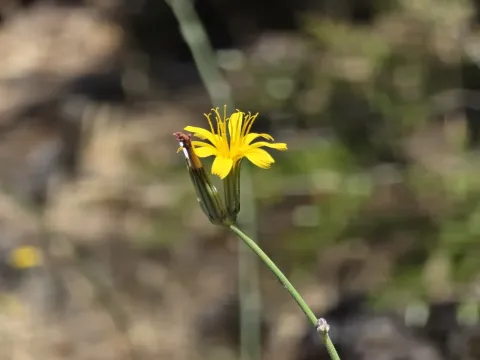
Chondrilla acanthophylla
Chondrilla acanthophylla
Chondrilla acanthophylla, a member of the Asteraceae family, is a perennial herbaceous plant. While often considered a weed in agricultural settings, its physiological adaptations are of significant interest to botanists and agronomists.
What the section contains
Chondrilla acanthophylla
The plant features a deep, robust taproot system that allows it to survive in arid environments where water resources are scarce. Its leaves and stem structures are designed to minimize transpiration, confirming its status as a highly resilient xerophyte.
It originates from the arid and semi-arid regions of Central Asia. The species thrives in sandy, stony, and saline soils, frequently colonizing disturbed sites and marginal lands where other plant species struggle to persist.
The plant requires high levels of solar radiation and is exceptionally tolerant of drought conditions. It does not demand high soil fertility, often outcompeting crops in nutrient-poor environments due to its highly efficient resource uptake mechanisms.
Economically, Chondrilla acanthophylla is primarily viewed as an invasive species. Its ability to extract moisture from deep soil layers makes it a formidable competitor for water against cereal crops and other agricultural cultivars.
The plant is susceptible to various fungal pathogens, particularly rust fungi, which can significantly inhibit its growth and reproduction. These natural pathogens are currently studied as potential agents for biological control.
Specific insect herbivores are known to feed on the plant, often damaging its reproductive organs. This natural predation is an important factor in regulating population densities in its native habitats.
Mechanical management is difficult due to the plant's deep taproot. Effective control usually requires deep tillage or specialized equipment capable of cutting the root system below the regeneration zone.
Chemical control is achieved through systemic herbicides that translocate to the deep root system. Application timing is critical; treatment is most effective when the plant is in the rosette stage or early bolting.
Integrated pest management strategies recommend a combination of crop rotation and competitive planting. By shading the soil and maintaining high plant density, farmers can effectively reduce the colonization pressure of Chondrilla acanthophylla.