
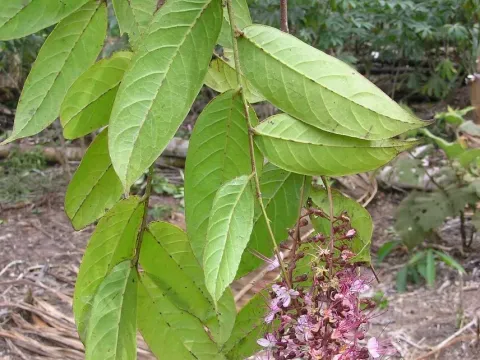
Hirtella
Hirtella
The genus Hirtella belongs to the Chrysobalanaceae family, consisting of evergreen trees and shrubs native to tropical regions of the Americas and Africa. These plants typically inhabit humid forests where environmental conditions remain constant throughout the year.
What the section contains


Hirtella
Hirtella requires high ambient temperatures to thrive, ideally between 22 and 30 degrees Celsius. It is highly intolerant of frost and cold stress, which necessitates that cultivation be restricted to strictly tropical or controlled greenhouse environments.
Soil requirements for Hirtella involve well-draining, nutrient-rich substrates. While the plant appreciates consistent moisture, it cannot withstand waterlogged conditions, as poor drainage quickly leads to the development of pathogenic fungal infections in the root zone.
Regarding light, the species generally prefers partial shade, mimicking the conditions of its natural forest understory habitat. Intense, direct sunlight can cause leaf scorching and excessive transpiration, potentially stunting the growth of younger plants.
Standard agricultural practices include maintaining high humidity levels and applying balanced organic fertilizers to support steady development. Consistent irrigation is required to ensure the plant never suffers from significant drought stress.
The primary utility of Hirtella lies in its edible fruits, which are consumed locally. These fruits are valued for their distinct flavor profiles and are often processed into jams or fermented beverages, serving as a secondary food source.
Harvesting is performed by hand due to the fragile nature of the fruits, which bruise easily during mechanical handling. Collectors must be careful to select only mature fruits to ensure optimal taste and prevent premature spoilage.
Beyond food production, the timber from certain Hirtella species is recognized for its durability and hardness, making it useful for local woodworking and construction purposes within its native geographical range.
Maintenance pruning is essential for plantation health, ensuring that the canopy remains open for adequate airflow. This practice significantly reduces the likelihood of localized pest infestations and fungal disease outbreaks within the plantation.
Post-harvest management is the most challenging aspect of Hirtella production. Due to the high water content and thin skin of the fruit, it must be consumed or processed immediately after picking to prevent rapid quality degradation.