
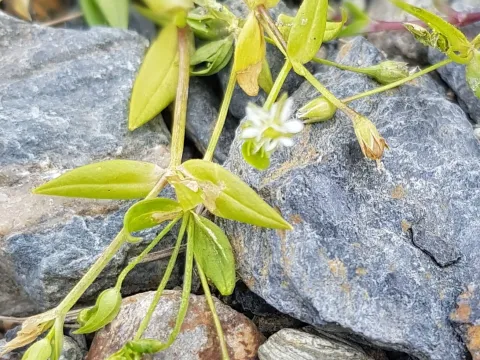
Northern stitchwort
Stellaria borealis
Northern stitchwort (Stellaria borealis) is a perennial herbaceous plant belonging to the Caryophyllaceae family. It is native to the northern regions of the Northern Hemisphere, where it thrives in cold and temperate environments across Eurasia and North America.
What the section contains
Northern stitchwort
The botanical structure of this plant features slender, branching stems and oppositely arranged leaves. It typically grows in moist habitats, including marshes, wet meadows, and the edges of boreal forests where the soil provides consistent hydration.
Growing conditions for this species require high levels of soil moisture and fertile, well-draining substrates. While it demonstrates resilience in shaded areas, it performs best when provided with sufficient ambient light during the growing season.
Regarding agrotechnical management, cultivators should prioritize maintaining soil porosity to support root development. The plant is highly winter-hardy, allowing it to survive harsh cycles of freezing and thawing common in its natural range.
Economically, while not a mainstream industrial crop, it is of interest for ecological restoration and botanical studies. Its role in the local ecosystem includes providing cover and foraging material for various wildlife species in the northern territories.
Common phytopathological threats include fungal infections like powdery mildew, which thrive in stagnant, humid air conditions. Ensuring proper ventilation around the plants is essential for preventing the spread of these pathogens.
Pests that can damage the plant include aphids and leaf-eating beetles. Integrated pest management, focusing on early detection and physical removal of infested foliage, is usually sufficient to maintain the health of the plant population.