
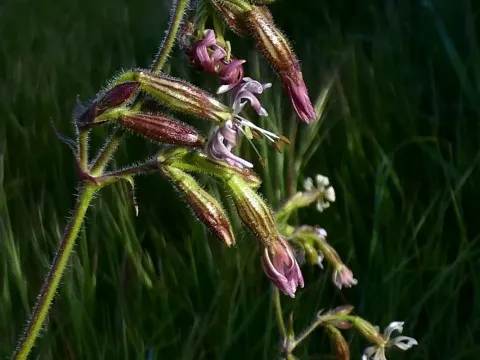
Nottingham catchfly
Silene nutans
Nottingham catchfly (Silene nutans) belongs to the Caryophyllaceae family and is a perennial herb with a robust taproot system. In natural conditions, seeds are spread by self-seeding during the summer and autumn months.
What the section contains
Nottingham catchfly
When cultivating, seeds should be sown in late autumn or early spring following a necessary period of stratification. The optimal planting depth is about 1–2 centimeters, as the small seeds require light and minimal soil coverage to germinate effectively.
The plant shows high germination energy at soil temperatures ranging from +12 to +15 degrees Celsius. Seedlings typically appear 2–3 weeks after sowing, forming a basal rosette of leaves that persists throughout the first year of growth.
The second year of vegetation is marked by the development of an erect stem, reaching 30 to 60 centimeters in height. The stem is frequently covered in sticky, glandular hairs, which is a distinctive characteristic of this species.
To establish a productive stand, a sowing rate ensuring a density of about 400–600 plants per square meter is recommended. This helps the crop compete effectively against weeds during the early developmental stages.
Silene nutans prefers well-drained, dry, and moderately fertile soils, frequently appearing on sandy or rocky substrates. The plant is highly drought-tolerant, making it a viable candidate for cultivation on poor-quality soils.
This crop is heliophilic, meaning it requires open, sunny locations for healthy development and profuse flowering. Under shaded conditions, stems become overly leggy, and the production of reproductive shoots is significantly reduced.
The plant demonstrates excellent winter hardiness and easily withstands harsh climate conditions typical of temperate zones. It generally does not require supplemental irrigation provided the soil moisture is sufficient in the spring.
The soil pH should ideally be neutral or slightly alkaline. Excessive soil acidity can negatively impact the development of the root system and the overall health of the plant during the growing season.
Agricultural maintenance involves keeping the area free of perennial rhizomatous weeds and providing moderate phosphorus-potassium fertilization at the start of the active growth phase.
The commercial use of Nottingham catchfly is primarily associated with its medicinal properties and decorative value. The yield of green mass depends directly on plant density and soil fertility levels.
For medicinal purposes, the aerial parts of the plant are harvested during the peak flowering stage. Harvesting should be performed in dry weather, cutting the stems at a height of 5–10 centimeters above the soil surface.
The average yield of dry mass can reach 15–20 centners per hectare under optimal planting conditions. Seed collection is carried out as the capsules mature, necessitating timely harvesting to prevent shattering losses.
Since the plant is entomophilous, it acts as a reliable nectar source for pollinators within meadow habitats. The potential honey production can reach 50–70 kilograms per hectare.
Regular renewal of the crop every 4–5 years is recommended to maintain stable productivity and prevent the stand from degrading or becoming overgrown with aggressive weeds.
Nottingham catchfly possesses a strong natural immunity, although excessive humidity can occasionally lead to fungal infections. The most common issues include powdery mildew and various leaf spot diseases.
Pests rarely cause critical damage, but aphid infestations or larvae of certain lepidopterans may occasionally be observed. Biological control methods are usually sufficient to manage pest populations.
- Powdery mildew (common in overcrowded stands)
- Leaf rust
- Aphids feeding on tender young stems
- Dipteran larvae affecting seed capsules
Disease prevention relies on adherence to standard agricultural practices: avoiding overcrowding, timely removal of plant debris, and ensuring proper ventilation and aeration of the cultivation plot.
Harvesting for medicinal raw material should take place in June or July when the plant is in its active flowering phase. During this time, the concentration of active biological compounds is at its highest.
Harvesting is performed either mechanically or by hand. The cut mass must be transported to drying facilities immediately to prevent spoilage and the loss of essential oils and other benefits.
Drying is conducted in well-ventilated rooms or under sheds, avoiding direct sunlight to preserve the color and chemical integrity of the material. The raw material should be spread in layers no thicker than 5 centimeters.
Seeds are collected in late summer when the seed capsules begin to dry and turn brown. Monitoring maturity is crucial, as immature seeds exhibit poor germination rates in subsequent seasons.
Storage of the dried raw material should occur in dry, secure facilities away from pests and moisture, utilizing paper or cloth bags that allow for natural air circulation.