
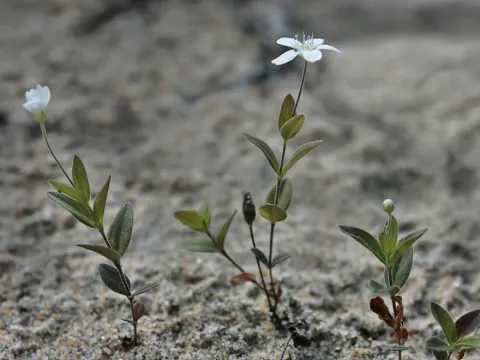
Moehringia
Moehringia
Moehringia is a genus of perennial herbaceous plants belonging to the Caryophyllaceae family. These plants are native to the Northern Hemisphere, often found in rocky crevices, mountainous terrain, and forest margins.
What the section contains
 Blunt-leaved sandwort
Moehringia lateriflora
Blunt-leaved sandwort
Moehringia lateriflora
 Moehringia bavarica
Moehringia bavarica
Moehringia bavarica
 Moehringia ciliata
Moehringia ciliata
Moehringia ciliata
 Moehringia concarenae
Moehringia concarenae
Moehringia concarenae
 Moehringia dielsiana
Moehringia dielsiana
Moehringia dielsiana
 Moehringia diversifolia
Moehringia diversifolia
Moehringia diversifolia
 Moehringia glaucovirens
Moehringia glaucovirens
Moehringia glaucovirens
 Moehringia grisebachii
Moehringia grisebachii
Moehringia grisebachii
 Moehringia insubrica
Moehringia insubrica
Moehringia insubrica
 Moehringia intermedia
Moehringia intermedia
Moehringia intermedia
 Moehringia lebrunii
Moehringia lebrunii
Moehringia lebrunii
 Moehringia markgrafii
Moehringia markgrafii
Moehringia markgrafii
 Moehringia muscosa
Moehringia muscosa
Moehringia muscosa
 Moehringia papulosa
Moehringia papulosa
Moehringia papulosa
 Moehringia pendula
Moehringia pendula
Moehringia pendula
 Moehringia pentandra
Moehringia pentandra
Moehringia pentandra
 Moehringia sedoides
Moehringia sedoides
Moehringia sedoides
 Moehringia tommasinii
Moehringia villosa
Moehringia villosa
Moehringia tommasinii
Moehringia tommasinii
Moehringia villosa
Moehringia villosa
 Three-nerved sandwort
Moehringia trinervia
Three-nerved sandwort
Moehringia trinervia
Moehringia
The botanical structure of the genus is characterized by its mat-forming growth habit, making it an excellent candidate for specialized rock gardens and landscape restoration projects that mimic natural alpine habitats.
Cultivation requirements involve providing a well-drained, porous substrate that prevents root rot. The plants thrive in neutral to slightly alkaline soils and perform best when situated in partial shade to protect them from excessive direct sun in warmer regions.
Water management is critical for the survival of Moehringia. While they require consistent moisture, they are extremely intolerant of waterlogged conditions, which can lead to rapid fungal decay of the root collar.
Maintenance tasks include the regular monitoring of soil structure and the periodic application of mineral fertilizers in early spring to encourage healthy vegetative growth before the flowering period.
The primary threats to Moehringia species are fungal pathogens, specifically those causing root rot, damping-off, and various forms of leaf spotting, usually triggered by poor drainage.
Insect pests such as spider mites and various lepidopteran larvae may infest the foliage during periods of drought or stress, significantly reducing the aesthetic value of the plants.
Disease management requires ensuring adequate spacing between individual plants to promote airflow, which effectively reduces the humidity levels that favor fungal growth.
Integrated pest management protocols should be followed, prioritizing the removal of infected debris and the use of site-specific fungicides if infestations become severe.
Regular inspection of the root system and soil environment is essential for early detection of potential issues, ensuring the longevity and health of the perennial planting.