
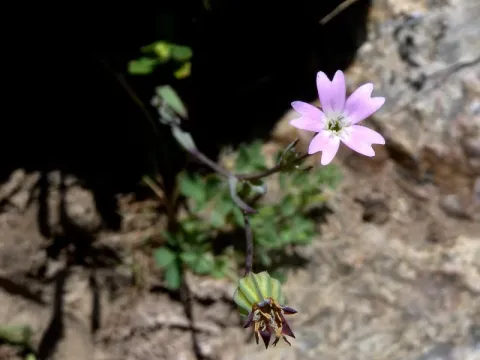
Silene laeta
Silene laeta
Silene laeta is an annual herbaceous plant belonging to the Caryophyllaceae family. It is recognized for its delicate appearance and adaptability in various garden settings.
What the section contains
Silene laeta
Sowing in open ground should occur in mid-spring, ensuring the frost risk has passed. The seeds require light for germination, so they should be sown shallowly.
Seedlings can be started indoors in seed trays during late winter. This method ensures a head start, allowing the plants to reach maturity earlier in the summer season.
Proper spacing is crucial for healthy growth; maintaining a distance of 15 to 20 centimeters between plants promotes airflow and prevents overcrowding.
Germination typically takes about two weeks under favorable temperatures. Consistent surface moisture is essential during this initial phase of development.
Silene laeta thrives in full sun locations. Sufficient solar exposure is necessary to support its flowering cycle and ensure strong stem development.
The plant requires well-drained soil to thrive. While it can adapt to various soil types, sandy or loamy soils with neutral pH provide the best results.
Watering needs are moderate. While the plant is somewhat drought-tolerant, supplemental irrigation during dry spells is recommended to prolong the flowering season.
Poor drainage is the primary enemy of this species. Waterlogged soil will almost certainly result in root rot and poor overall plant vigor.
Minimal fertilization is required. If the soil is nutrient-poor, a balanced, low-nitrogen liquid fertilizer applied once can encourage healthy bud formation.
Fungal infections, particularly gray mold and leaf spot, are common threats, especially when planting density is too high or airflow is restricted.
Aphids represent the most significant pest concern. These insects colonize tender new growth, draining sap and potentially transmitting viral plant diseases.
Spider mites may become problematic during periods of extreme heat and low humidity, causing visible stippling and yellowing on the foliage.
Good cultural practices, including the removal of debris and maintaining adequate plant spacing, significantly reduce the incidence of disease outbreaks.
In case of severe infestation, targeted application of organic insecticidal soaps or specific fungicides is recommended to maintain the plant's health.